
Enjoy browsing, but unless otherwise noted, these houses are private property and closed to the public.
So don't go tromping around uninvited! CTRL-F to search within the page.

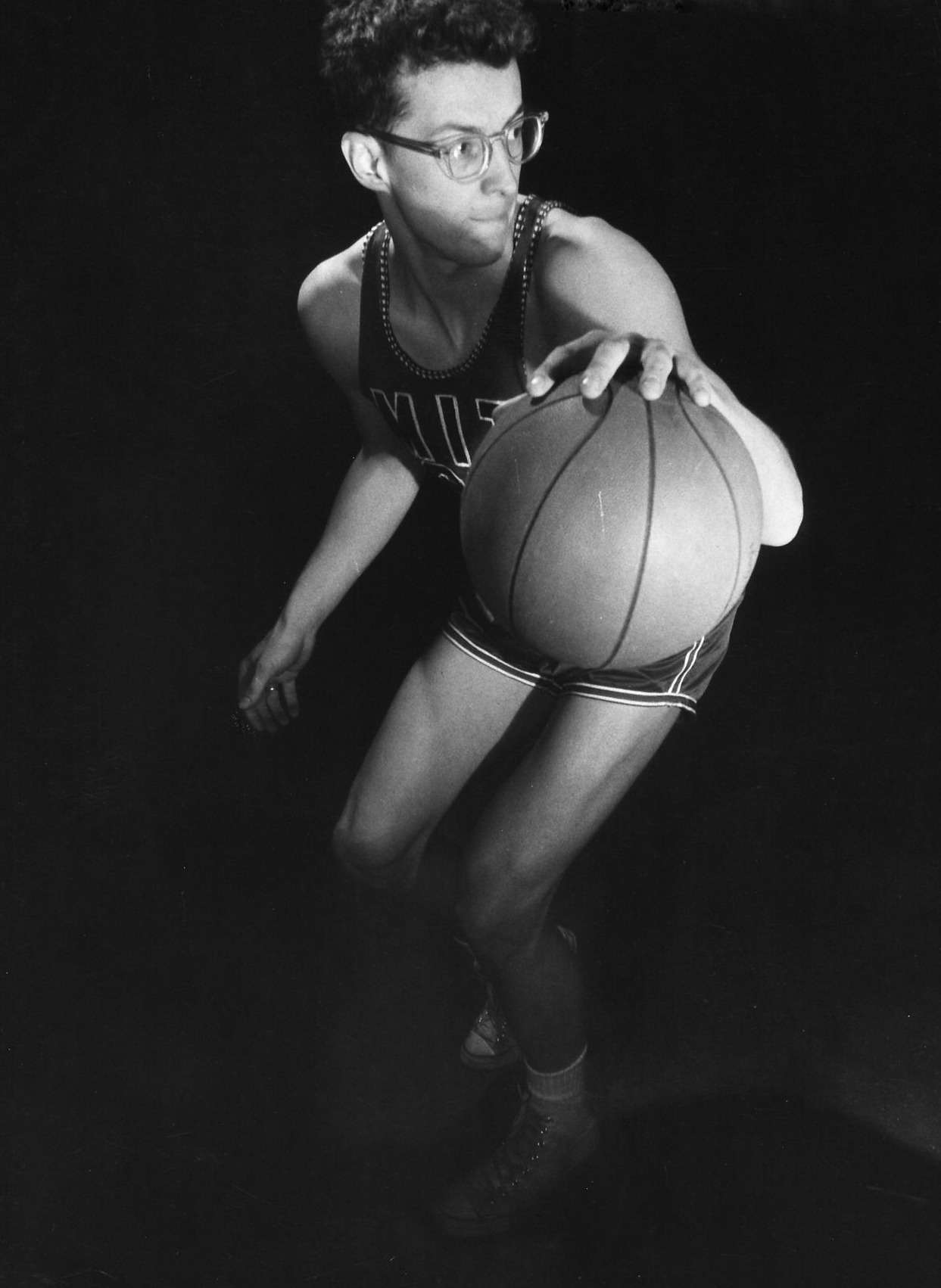

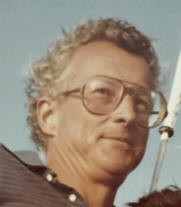
DIMITRY K. (DEE) VERGUN (1933-2026)
Vergun was born in Prague. His family moved to Russia and later Germany. The family was captured by the Nazis in Belgrade in 1941 and he was taken to a labor camp. He and his brother Alexei joined family in Houston TX as the war ended. Vergun graduated from Lamar High School and won a scholarship to the Memphis Academy of Art, but he decided to attend the University of Texas studying enginering instead. He graduated from MIT in architecture in 1956 where he was co-captain of the basketball team and the highest scorer in MIT history at the time. He graduated with a MS in Structural Engineering from Stanford in 1957. He was recruited by the Lakers but decided to pursue engineering instead.
Vergun worked 1957-1959 for SOM in San Francisco, with projects including the Norton Building in Seattle, the John Hancock Building in San Francisco, and inspections for the Winter Olympic Games in Squaw Valley. From 1959-1960, he worked for Bechtel in San Francisco on power plants. From 1960-1969, he was Chief Engineer for Reid and Tarics in San Francisco. From 1969-1972 he was EVP of Dukor Modular Systems, specializing in factory-built housing using lightweight steel. From 1973 until he retired, he was in private practice teaching Building Science and Architecture at USC. He was one of the world's experts on designing buildings for earthquake and environmental safety and an expert witness for litigation cases.
He was co-author with James Ambrose of:
1980 -
Simplified Building
Design for Wind and Earthquake Forces,
2nd edition 1990,
4th edition 1994, 5th edition 1997
1985 - Seismic Design of Buildings
1987 - Design for Lateral Forces
1999 - Design for Earthquakes
The Ambrose-Vergun books are written for architects and architecture students who need a working intuition for what an earthquake does to a building before they hand a sketch to a structural consultant. The volumes walk through how seismic forces propagate through diaphragms, shear walls, and braced or moment-resisting frames; they discuss symmetry, continuity, redundancy — as a design problem rather than a numerical one. That perspective is unusual and valuable. Most seismic literature is aimed at engineers; most architectural literature treats earthquakes as a code constraint. Vergun and Ambrose split the difference, and several generations of architects educated in the United States have learned the basics of seismic behavior from their pages.
Vergun was the structural engineer for many Modernist houses
by architects
Pierre Koenig
and
Ed Niles,
plus
Ray Kappe, Eric Owen Moss,
John Mutlow,
Frank Dimster and
Arnata Isozaki, among many others. These often were
the kind of problem Vergun specialized in: a small, sloping
lot, an architect determined not to compromise the elegance
of the steel cage, and a region where lateral seismic forces
have to be considered.
In California where the design profession has had to absorb
hard lessons from Sylmar (1971), Loma Prieta (1989), and Northridge (1994), Vergun spent decades helping to make that
conversation possible — at the desk, in the classroom, and on the printed page. Long after the next round of code
revisions has been absorbed and the next generation of
California houses built, the bibliographies of seismic-design
education will still carry the name Vergun.
1975 - de Bretteville and Simon Houses
1978 - aka Deconstructivist Open House, designed by Coop Himmelb(l)au.
Around 1979 -
a
Mutlow/Dimster house on Grand Bahama that won a 1980 AIA/LA
Merit Award.
1990 - The David and Karen Gray House, Malibu CA, designed by David Gray.
1991 - The Mark Cigolle and Kim Coleman House, aka Canyon House,
Santa Monica CA, designed by the clients.
1992 - The David and Margaret Lederer Renovation, AKA Anderson House,
Pacific Palisades, Los Angeles, CA, designed by
Finn Kappe.
2011 - Rose Avenue Residence and Studio, Venice CA. Designed by Reed Architectural
Grou
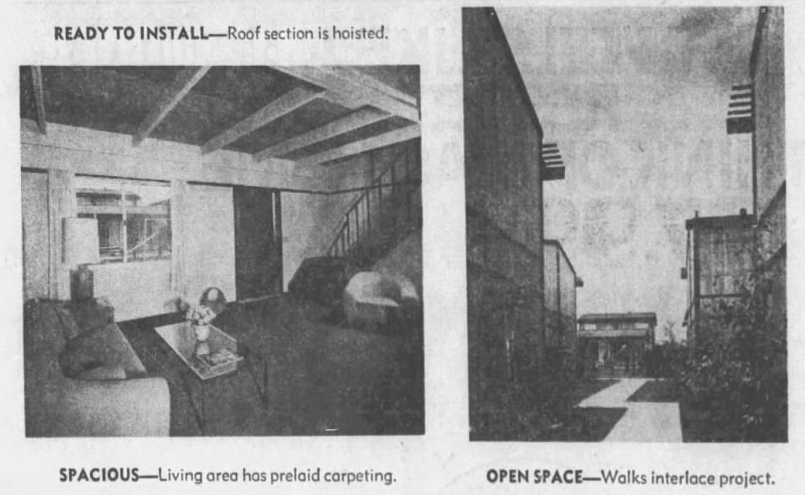
1971 - The Pierce Apartments Townhouses, Gilroy CA. The first residential community in the West to be built in a factory was dedicated in 1971 in Gilroy CA. 54 units. A Ducor Modular Systems project. Additional units were to be built in Montain View, Watsonville, Morgan Hill, Santa Clara Santa Cruz, and Santa Rosa CA.


1987
- The Beverly Morse House, aka Brentwood Architectural High Tech, 12500 Cloud Lane, Los Angeles CA. Interiors by David Hertz. 1.5 acres. Deeded to her trust in 1992. Has been renovated. Was a rental for many years.Sources include: Dimitry Vergun; Shannon Vergun, Alexandra Vergun, Anna Vergun, Ed Niles, Mina Chow.