
Enjoy browsing, but unless otherwise noted, these houses are private property and closed to the public.
So don't go tromping around uninvited! CTRL-F to search within the page.
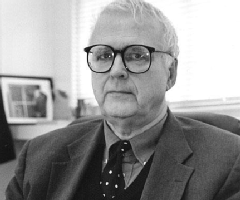
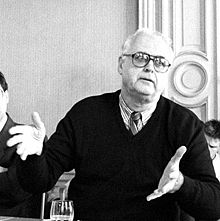
(pronounced hay-duck)
JOHN QUENTIN HEJDUK, FAIA (1929-2000)
Hejduk was born in Czechoslovakia and spent much of his life in New York City. Hejduk started in 1947 at the Cooper Union School of Art and Architecture, finished in 1952 at the University of Cincinnati, and got a Masters in 1953 at the Harvard Graduate School of Design, studying under Sert, Gropius, and Breuer. He worked for several firms in New York including I. M. Pei and A. M. Kinney. He was part of the Texas Rangers, a group of innovative architects and professors led by Harwell Hamilton Harris at the University of Texas Austin, whose other participants include Colin Rowe and Werner Seligmann. He established his own practice in New York City in 1964 and began teaching at Cooper Union. His arrival — along with other influential professors including Raimund Abraham, Ricardo Scofidio, Peter Eisenman, Charles Gwathmey, Diana Agrest, Diane Lewis, Liz Diller, David Shapiro, and others — transformed the practice and critical thought of architecture at the school. Hejduk's early work and curriculum grew from a set of exercises exploring cubes, grids, and frames for which he was awarded a Graham Foundation grant in 1967. Eventually, his modernist space-making exercises, heavily influenced by Frank Lloyd Wright and Ludwig Mies Van Der Rohe, moved towards free-hand "figure/objects" influenced by mythology and spirituality. A large portion of his work is archived at the Canadian Centre for Architecture in Montreal, Quebec. He became Dean in 1975. His students included Daniel Libeskind, Shigeri Ban, and Ricardo Scofidio.
Hejduk was one of the New York Five (along with architects Peter Eisenman, Richard Meier, Michael Graves, and Charles Gwathmey) whose early works are described in the book Five Architects.
Bio adapted from Wikipedia.

1954 - The Economy House 2. Unbuilt.
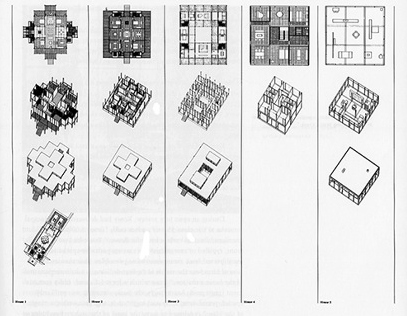
1954 - The Texas Houses. Unbuilt. Seven houses.
1954 - The Apartment House. Unbuilt.
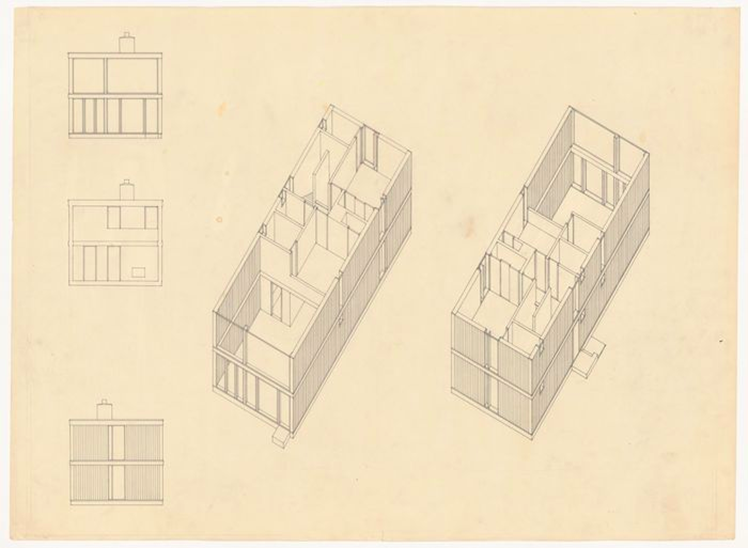
1954 - aka Ithaca House. Unbuilt.
1954 - aka Piano Houses. Unbuilt. 4 houses.
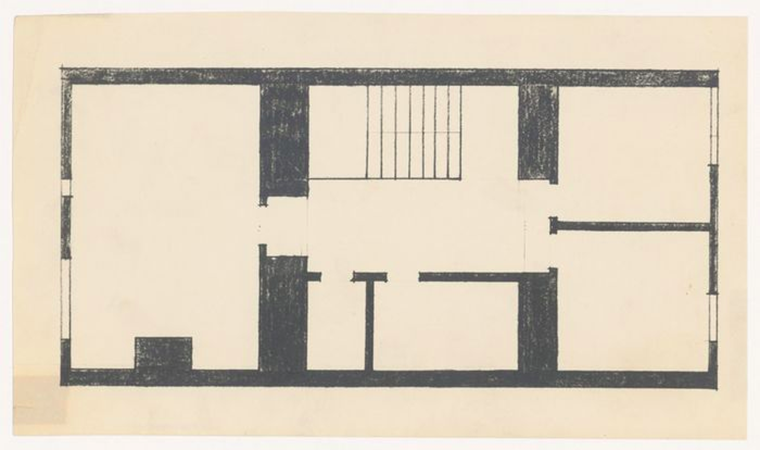
1954 - aka Row Houses. Unbuilt.
1955 - The Skinner Duplex, Austin TX. Unbuilt.
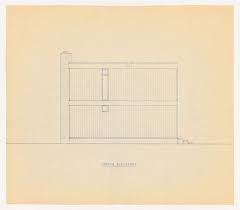
1958 - aka Northern NY House. Likely unbuilt.
1959 - The Friedlander House. aka Economy Studio, Waverly NY. Unbuilt.
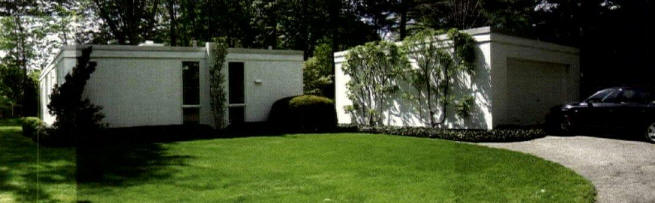
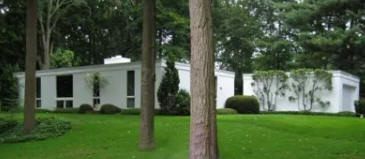
1960 - The William and Barbara Metzger Demlin House, aka Economy House 1, 22 The Maples, Locust Valley NY. Commissioned in 1954. Sold around 1978 to B. Frost Jackson. 1600sf addition in 2007 by Samuel Anderson; project architect Kimberley Furlong. Around 2008 Joseph Koerbel did a landscape design update. Still owned by Jackson as of 2022.
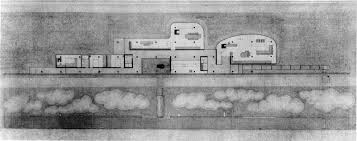
1966 - aka Grandfather Wall House. Unbuilt.
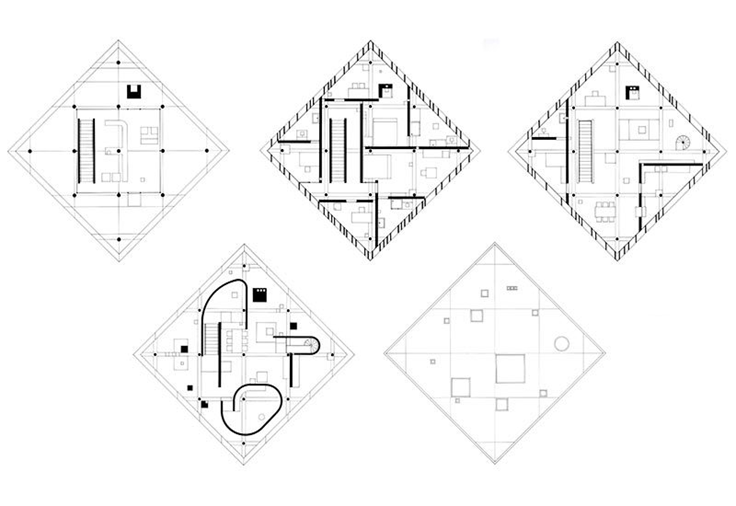
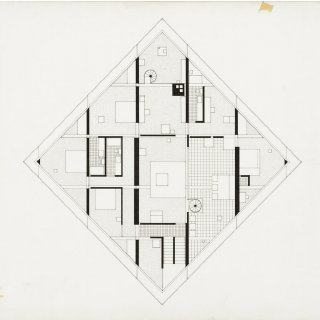
1967 - The Diamond Houses, A, B, and C. Unbuilt. A & B shown above. In 1962 Hejduk started a six-year investigation on the architectural implications of the "diamond configuration:" a forty-five-degree rotation of bounding elements relative to an orthogonal system. The "Design for Exhibition" at the Architectural League in New York in 1967 showed these three projects.
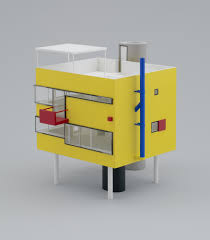
1968 - The Bernstein House, Mamarondek NY. Unbuilt. MOMA model.
1968 - aka Good Neighbor House. Unbuilt.
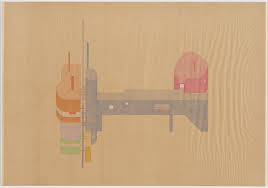
1968 - The Wall House 1 and 3. Unbuilt. See Wall House 2, below.
1968 - The Ambiguity House. Unbuilt.
1968 - The Extension House. Unbuilt.
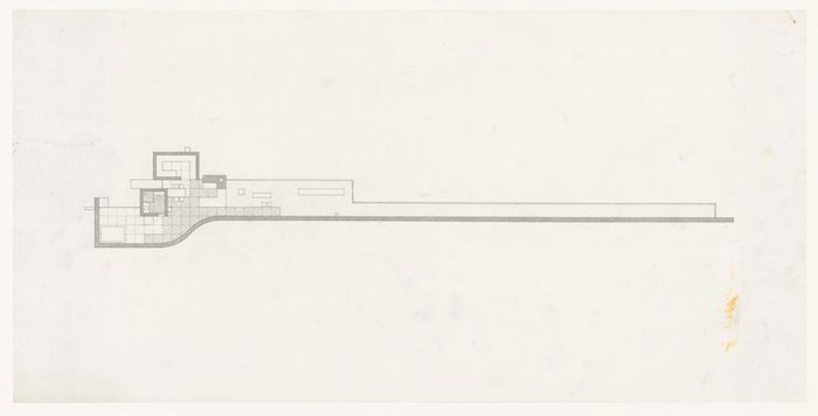
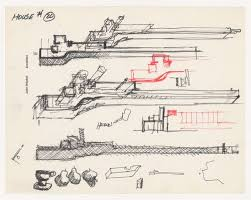
1968 - The Gunn House. Unbuilt.
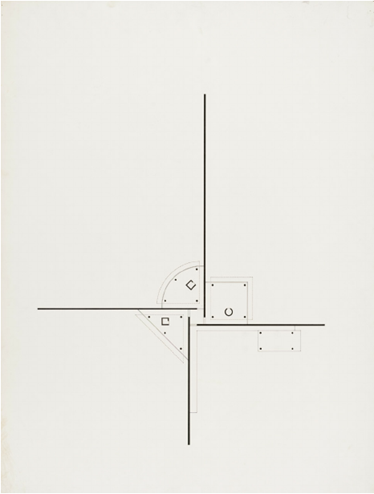
1968 - The 1/4 House. House variations A, B, C, and D, all unbuilt. Plan C shown above.
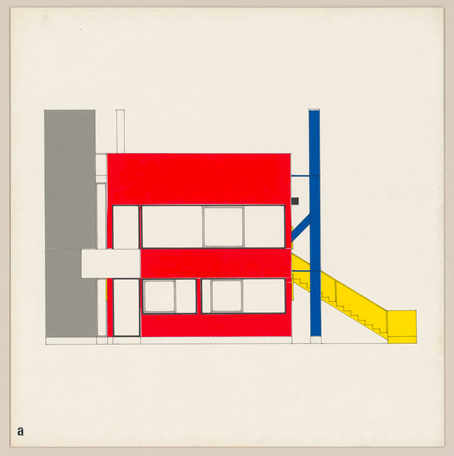
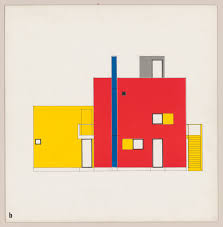
1968 - The Red-Yellow Houses. Four unbuilt houses A-D. Houses A and B shown above.
1968 - aka Space Shuttle House. Unbuilt.
1969 - The Hommel Apartment, New York. Presumed built. Status unknown.
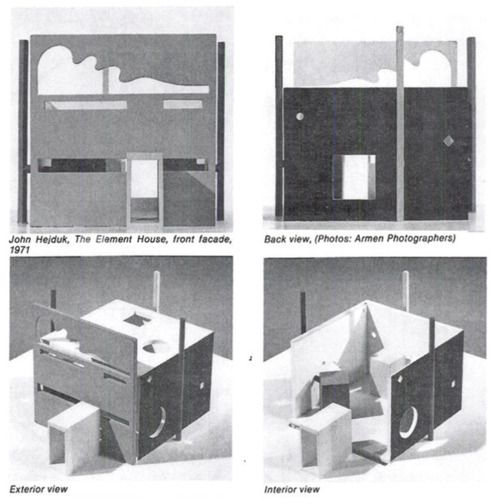
1971 - The Element House. Unbuilt.
1973 - The Dilemma House. Unbuilt.
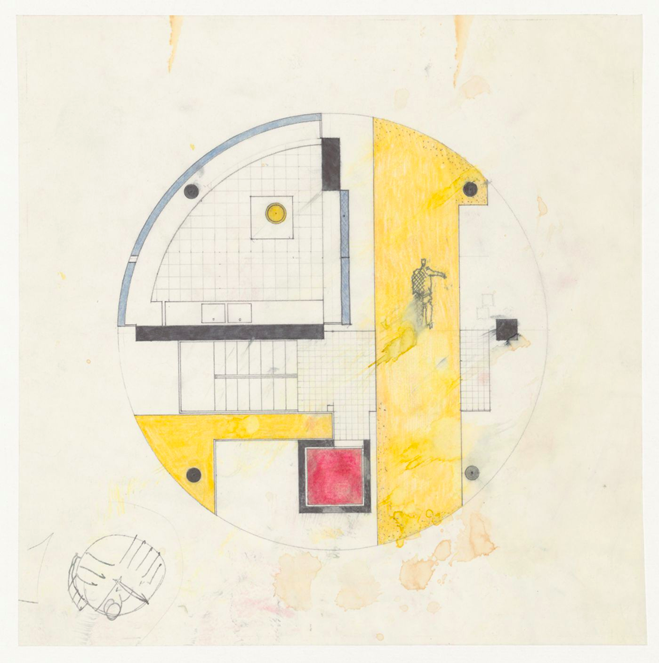
1974 - The Circular House. Unbuilt.
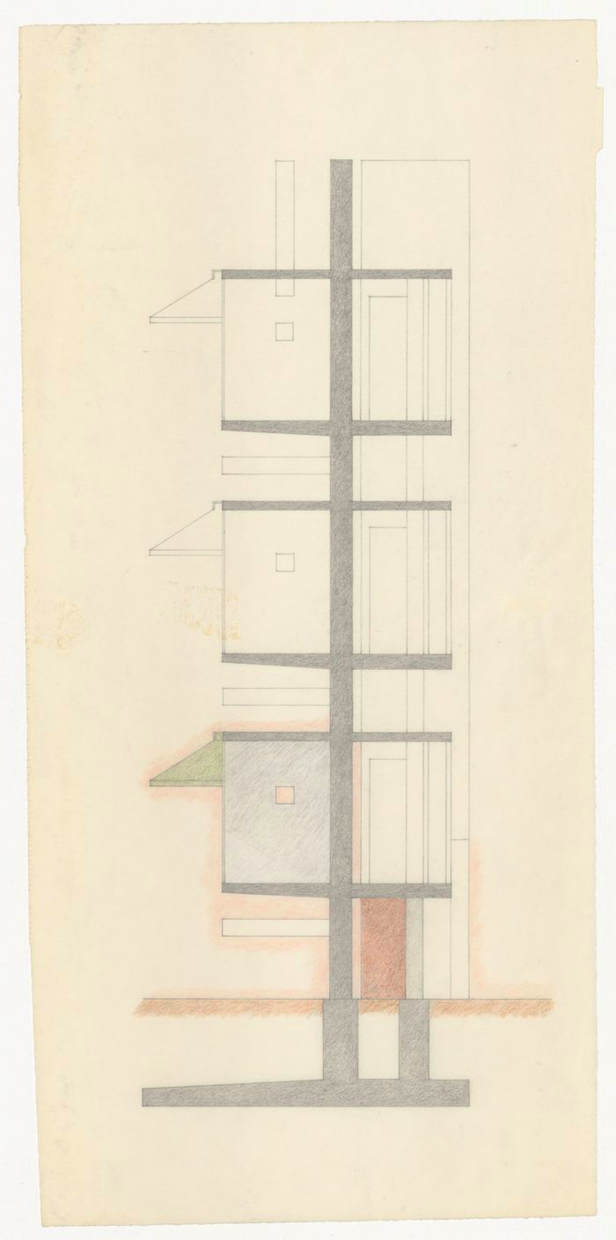
1974 - The House for the Inhabitant who Refused to Participate Project, Venice Italy. Unbuilt.
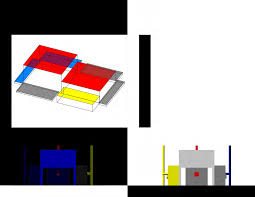
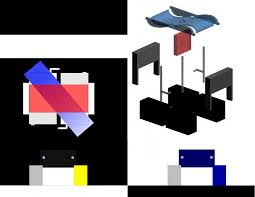
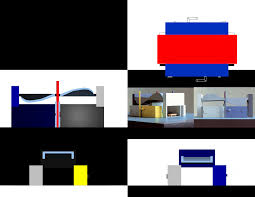
1974 - The L. A. House, aka City of the Angels House, aka Day-Night House, Los Angeles CA. Unbuilt.
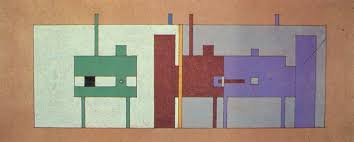
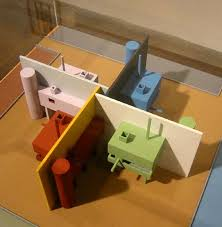
1974 - The North East South West House. Unbuilt.
Around 1977 - The Campagna House. Unbuilt.
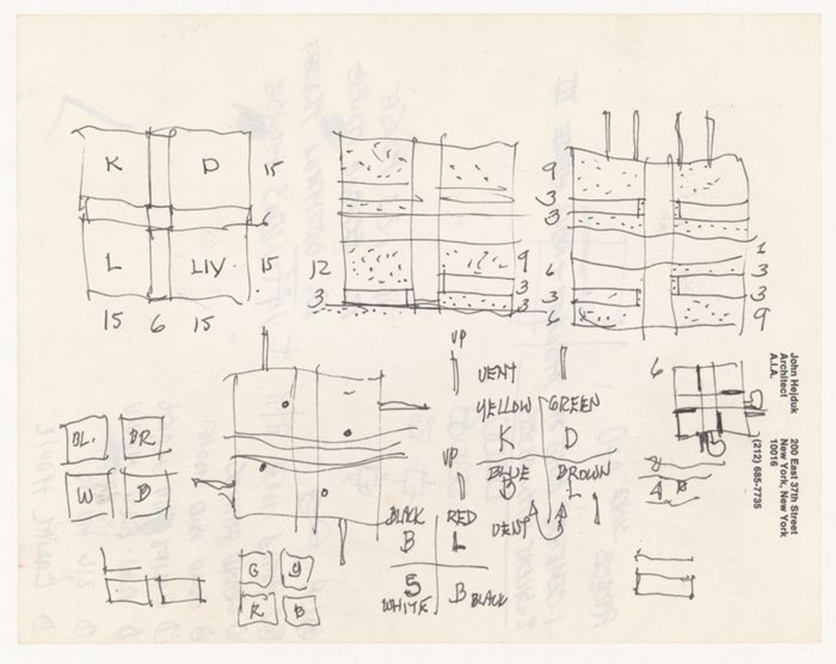
1979 - The Todre House. Unbuilt.
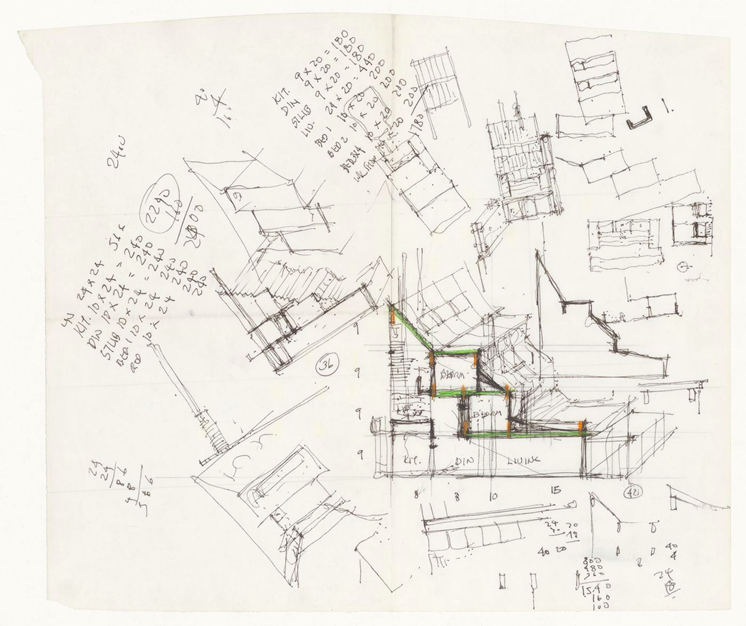
1979 - The 0 30 45 60 90 House. Unbuilt.
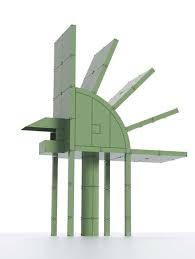
1982 - aka House of the Painter. Built as full scale model for the "Idea, Process, Result" Exhibition in Berlin in 1984. Cited in NY Times, 12/20/2002. Unsure of status.
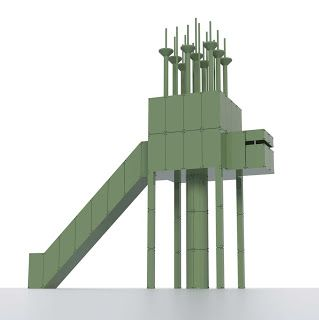
1982 - aka Studio for a Musician. Built as full scale model for the "Idea, Process, Result" Exhibition in Berlin in 1984. Unsure of status.
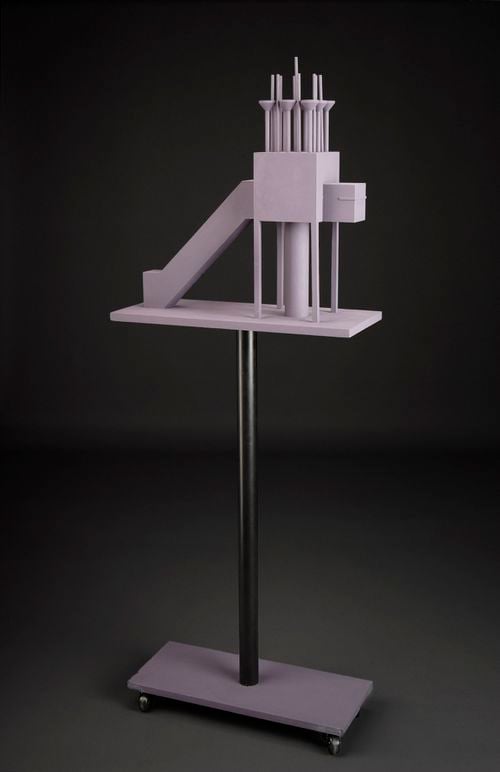
1983 - aka House For a Musician. Unbuilt.
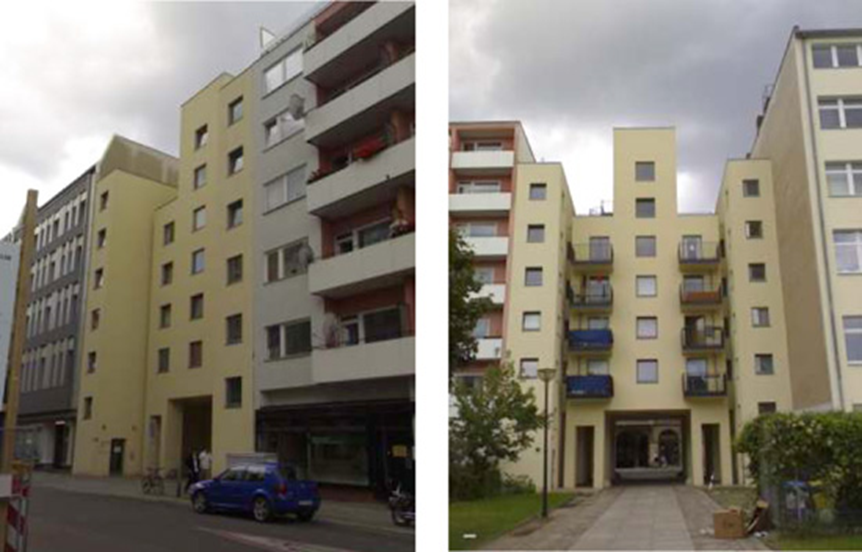
1987 - aka Gate House Renovation, block bounded by Hedemannstrasse, Friedrichstrasse, Franz Kluhs Street, and William Street, Berlin, Germany. Designed for the 1987 IBA.
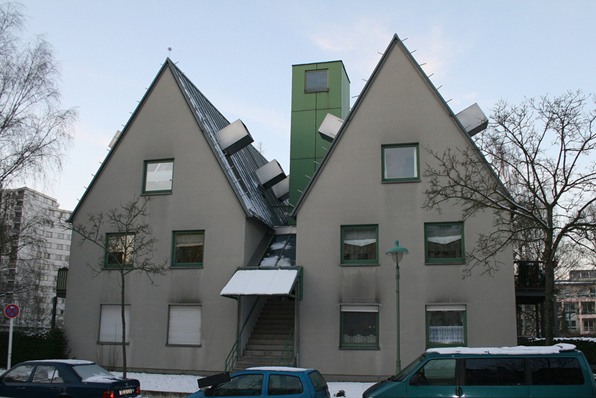
1988 - The House for Two Brothers, part of the Tegel Masterplan, Berlin Germany. John Hejduk designed the Tegel Housing as part of the 1987 IBA. Each building in the complex opens out to the harbour and lake. Being a more affluent area of Berlin, the buildings have been maintained more than some of the other projects from the IBA.
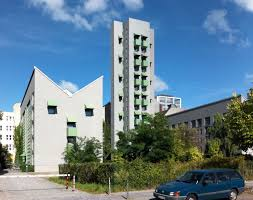
1988 - The Kreuzberg Tower and Wings, Charlottenstrasse 97-A, 10969 Berlin Germany. 14-story tower with two separate 5 story wings.
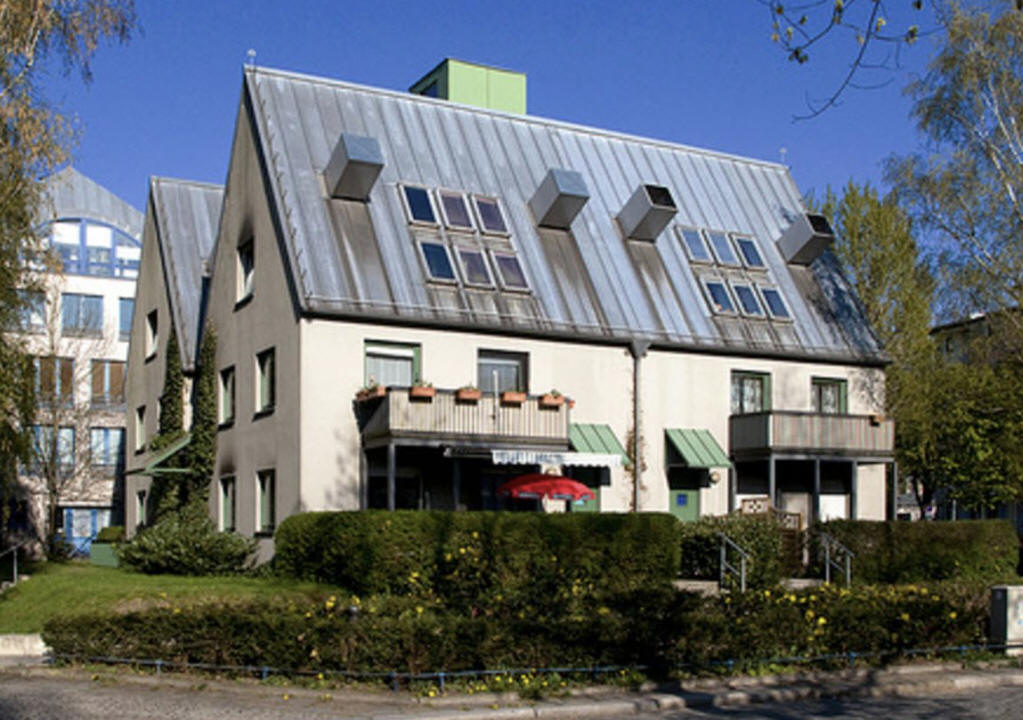
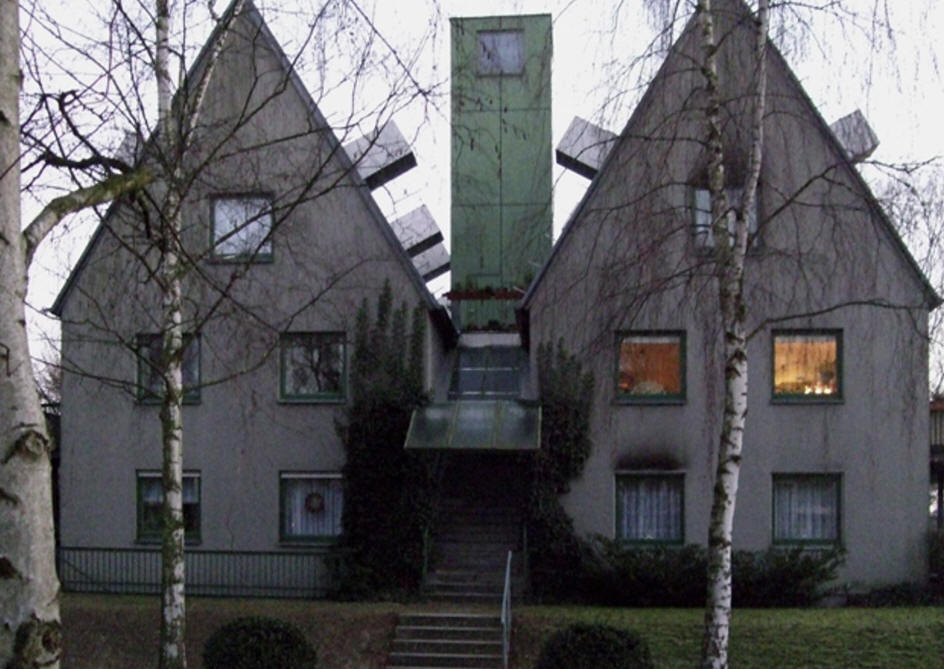
1988 - The House of the Quadruplets, aka House for two Brothers. Berlin, Tegel, Germany. Built.
1998 - La Máscara de la Medusa, Buenos Aires, Argentina. Status unknown.
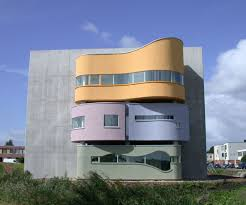
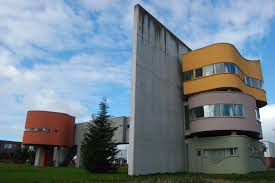
2001 - The 1976 Wall House 2 for A. E. Bye, Ridgefield CT. The original 1972 commission was unbuilt in CT but eventually was built, enlarged by 20%, at A. J. Lutulistraat 17, 9728 WT, Groningen, Netherlands, completed by architects Thomas Muller, van Raimann Architekten and Otonomo Architekten.
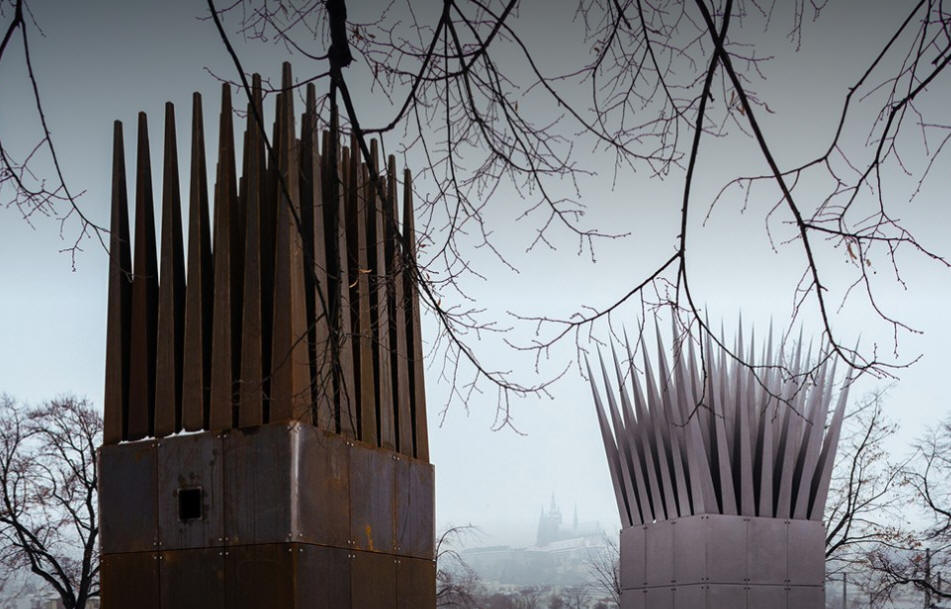
2016 - aka House of the Suicide and House of the Mother of the Suicide, Prague, Czech Republic. Monument to Jan Palach.
Sources include: The Cooper Union.