Friday, July 9, 2010

North Carolina Museum of Art featured in Architectural Record

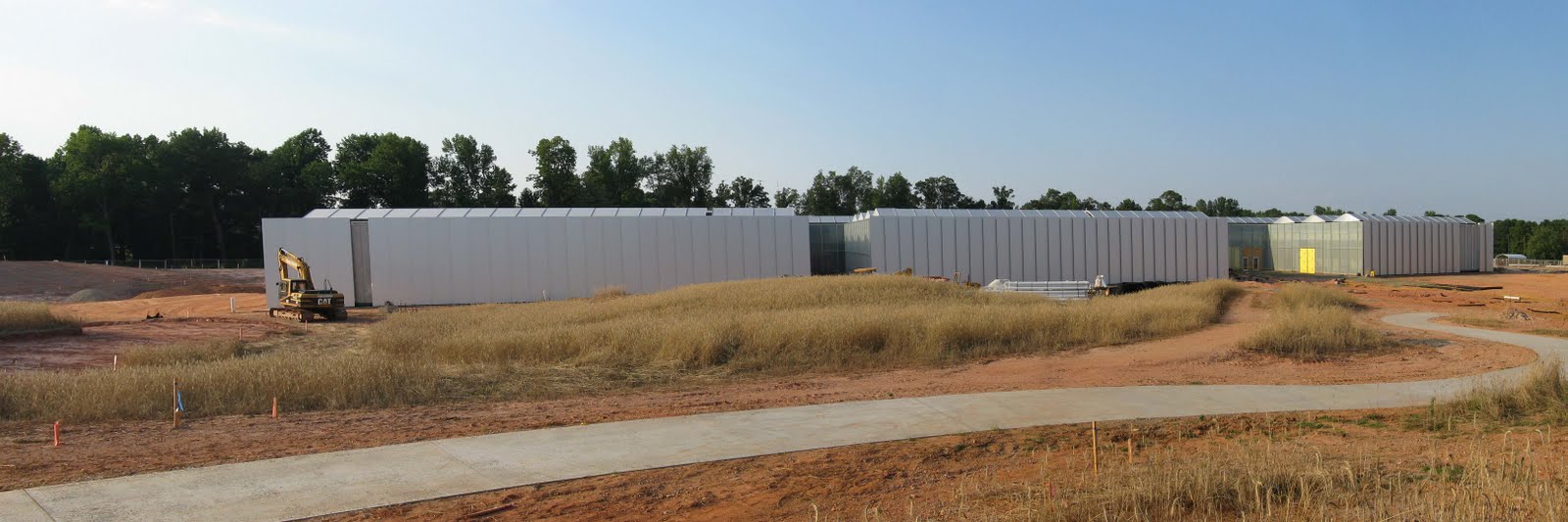
The recently completed addition to the North Carolina Museum of Art has been featured in this month's issue of Architectural Record. The article provides a breakdown of most of the major formal moves by Thomas Phifer and Partners, as well as some fantastic photography. If for nothing but the photography, it is worth following the link. The article also calls to attention a precedent we had also thought of after visiting the new museum - Kahn's Kimbell Art Museum in Dallas, specifically the skylight detail. The skylights bring in ample, high quality natural light to allow the artwork of NCMA's permanent collection to be viewed the way it is supposed to be.

addition to NCMA under construction December 2009

Although we're not thoroughly convinced of all the aspects of the building; such as the entry, exterior form/skin, and at least one of the sculptures on the grounds (the tree that looks to be a knockoff of a similar one located in RDU Terminal 2) I must say that the interior of the building itself is an experience unlike any I have ever encountered. In an age of objectified buildings, the interior of the NCMA allows the visitor to essentially forget the building itself even exists and becomes a blank canvas of sorts for the collection. That is the real strength and beauty of the building - its success in remaining true to its purpose.

Friday, June 25, 2010

Marvin Malecha Interview on Arch Daily (2009)

Current Dean of NC State's College of Design and 2008-09 President of the AIA, Marvin Malecha gives an interview for Arch Daily at the AIA Convention. The audio for the 25 minute interview is a little scratchy at times, but it is only a small bother.

The interview begins with a brief introduction of the AIA and then the interview moves into salient topics such as: selecting an architecture school, learning individually how to design, the importance of social networking in architecture, designing for a sustainable future, drastic changes ongoing in the field of architecture and the future of the AIA, just to name a few topics.

A couple of solid one-liners from the interview:

"We do not have architecture until we have people. We fail at architecture if we don't improve the lives of people."

"Design is a verb, not a noun. Great architecture is a verb and not a noun."

"Architects set the stage for life."

Enjoy!

Monday, June 21, 2010

Donations Needed for Wake County Recycling Center Convenience Huts


NCSU College Of Design- Wake County Partnership

Convenience Center Huts (CCH) Design-Build

Three (3) CCH for Wake County Recycling Centers

The Project:

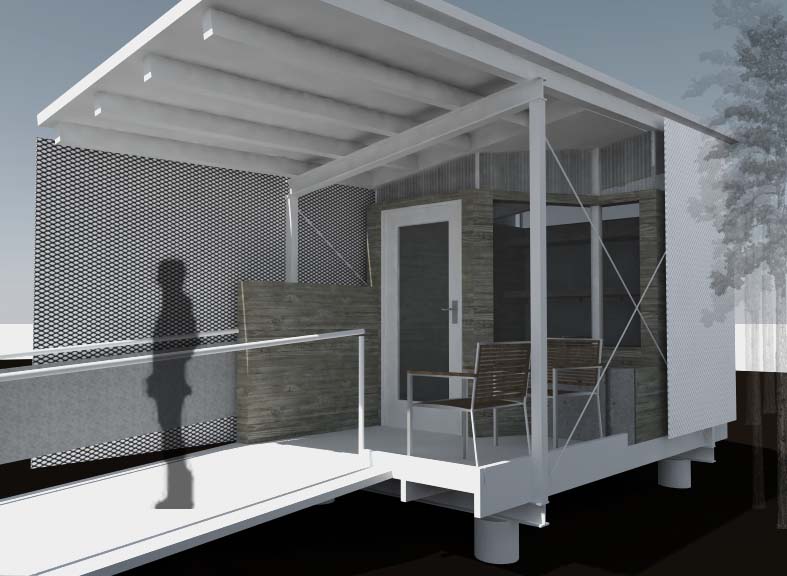
Every week, thousands of people drop off trash and recyclables at Wake County Convenience Centers. Convenience Center Huts (CCHs) are the first thing that they see. These buildings will be a signpost for recycling, reuse, conservation, and clean energy generation. CCHs also house and protect the staff in inclement weather, they offer a small workspace, and they include a small place to prepare and eat basic meals.

The Parameters:

· Limit the finished building size (not including the foundation or the ramp) so that it fits into a box that is 8’ 6” wide, 11’ 0” tall, and 14’ 0” long. To be built off-site and moved via tele-handler.

· Limit the weight of the structure to 3,000 pounds

· Collect, store, and dispense gravity fed and dispensed rainwater for irrigation

· Use materials, form, and systems to communicate positive information about recycling, reuse, clean energy generation, water conservation, and energy conservation to center users

· Use a minimum of 50% (by weight) recycled or reused materials

· Meet all Commercial Building Codes/ ADA Universal Design parameters

Community Partnerships- Support:

The recycling centers attempt to address the waste crisis attached to our society's consumption culture. In-kind donations, scrap materials, financial resources, and other support from community organizations/ businesses act as a public display of a commitment to the reduction and recycling of waste on both the production and consumption sides. Each CCH is less than 120 sq. ft. and what might be unusable for certain companies would be a perfect reuse opportunity in our projects. In-kind donations might include TPO roofing membrane, technical assistance, electrical assistance, certified welder assistance, doors/ windows, nominal lumber, building paper, etc.

We are able to offer tax-deductions based on in-kind or material donations, as well as provide permanent signage to acknowledge business' support, inclusion in documentation website, and mention in any publicity from newspapers, etc.

Contact:

For further information or to make donations contact Christoph 443.472.6992.

Designs:

Below you will find images of the two of the three designs for the Convenience Center Huts (CCH). Projects are already through Design Development, currently in the Permitting Process, with the end of construction being the first week in August.


Site 1: 10505 Old Stage Road


Site 8: NC Highway 98
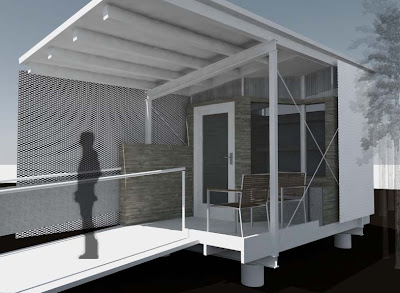


Site 9: 3401 New Hill Holleman
Wednesday, June 16, 2010

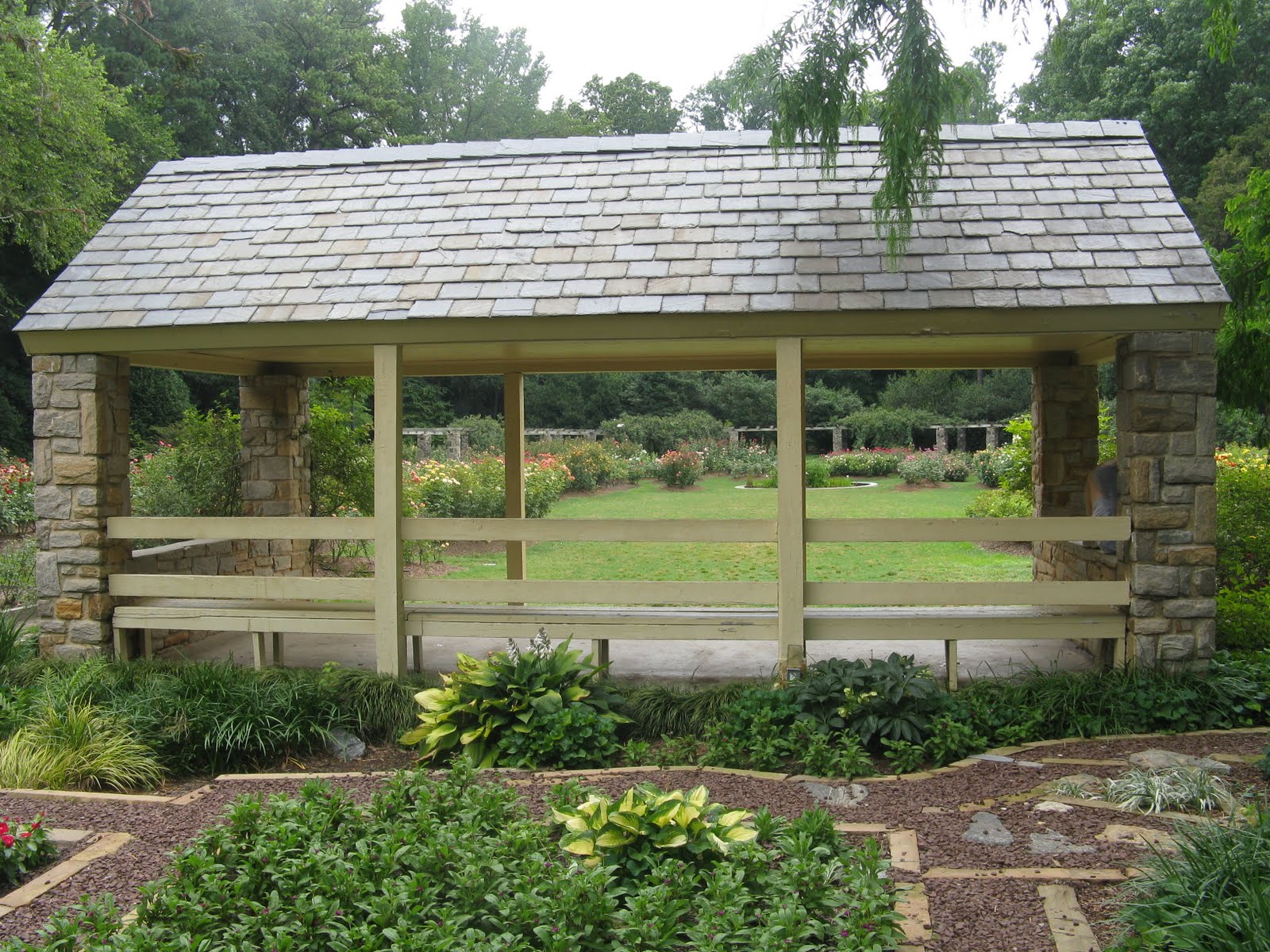
Urban Oasis - Raleigh Rose Garden

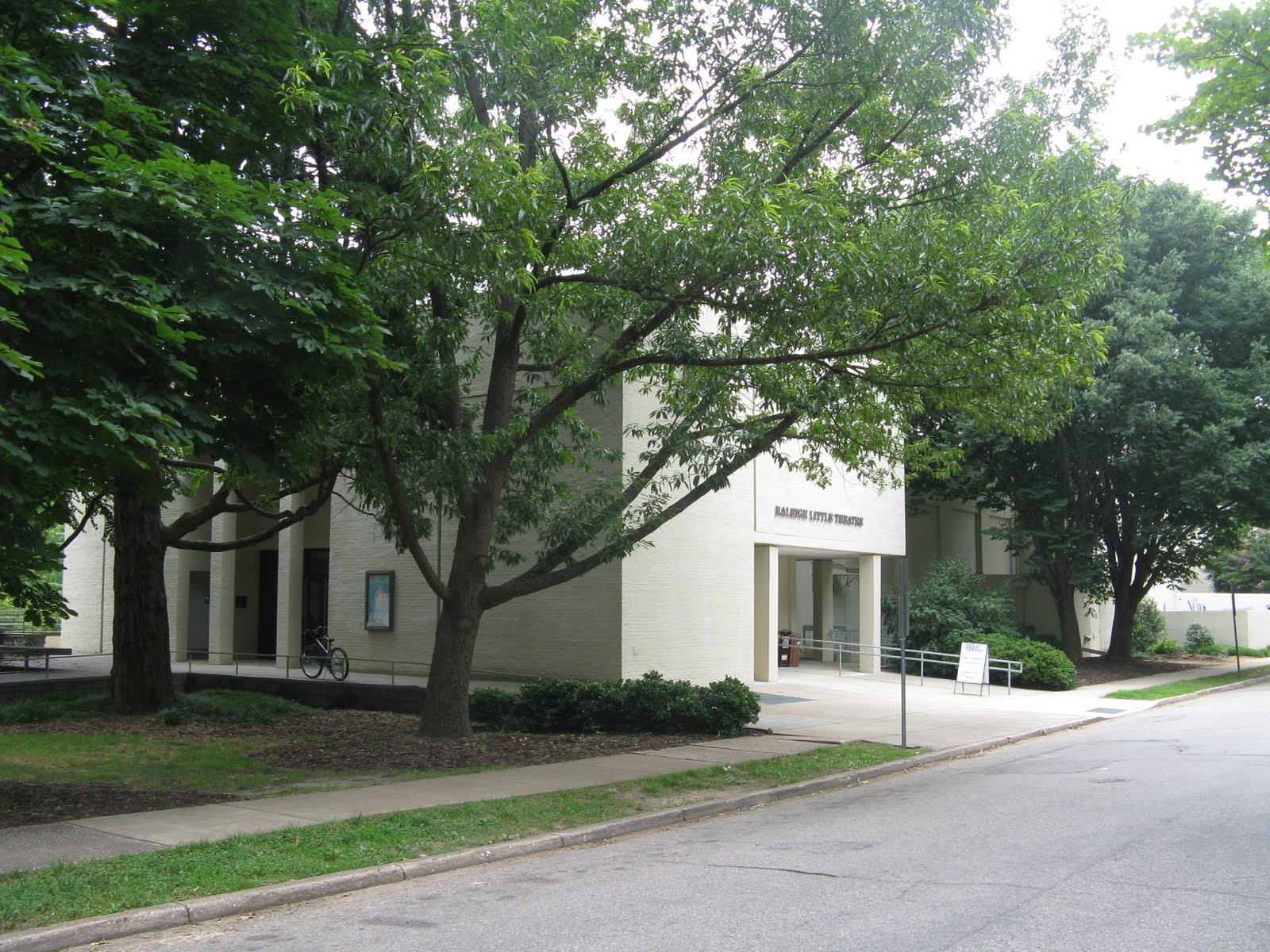
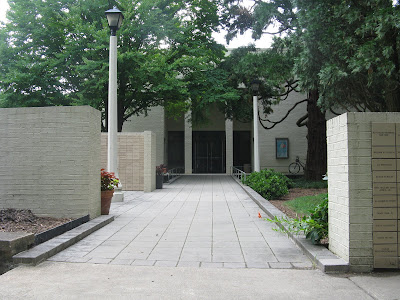
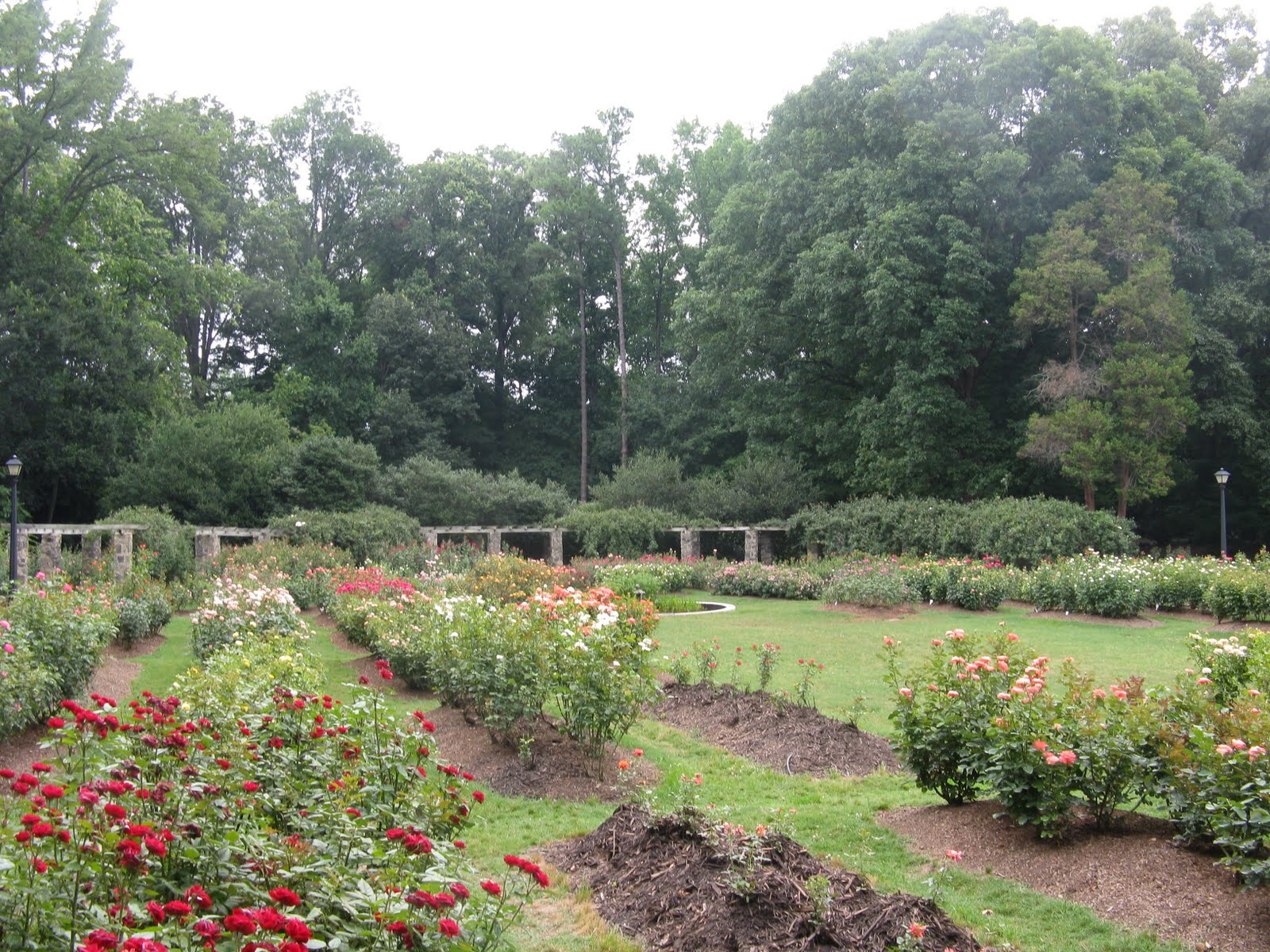
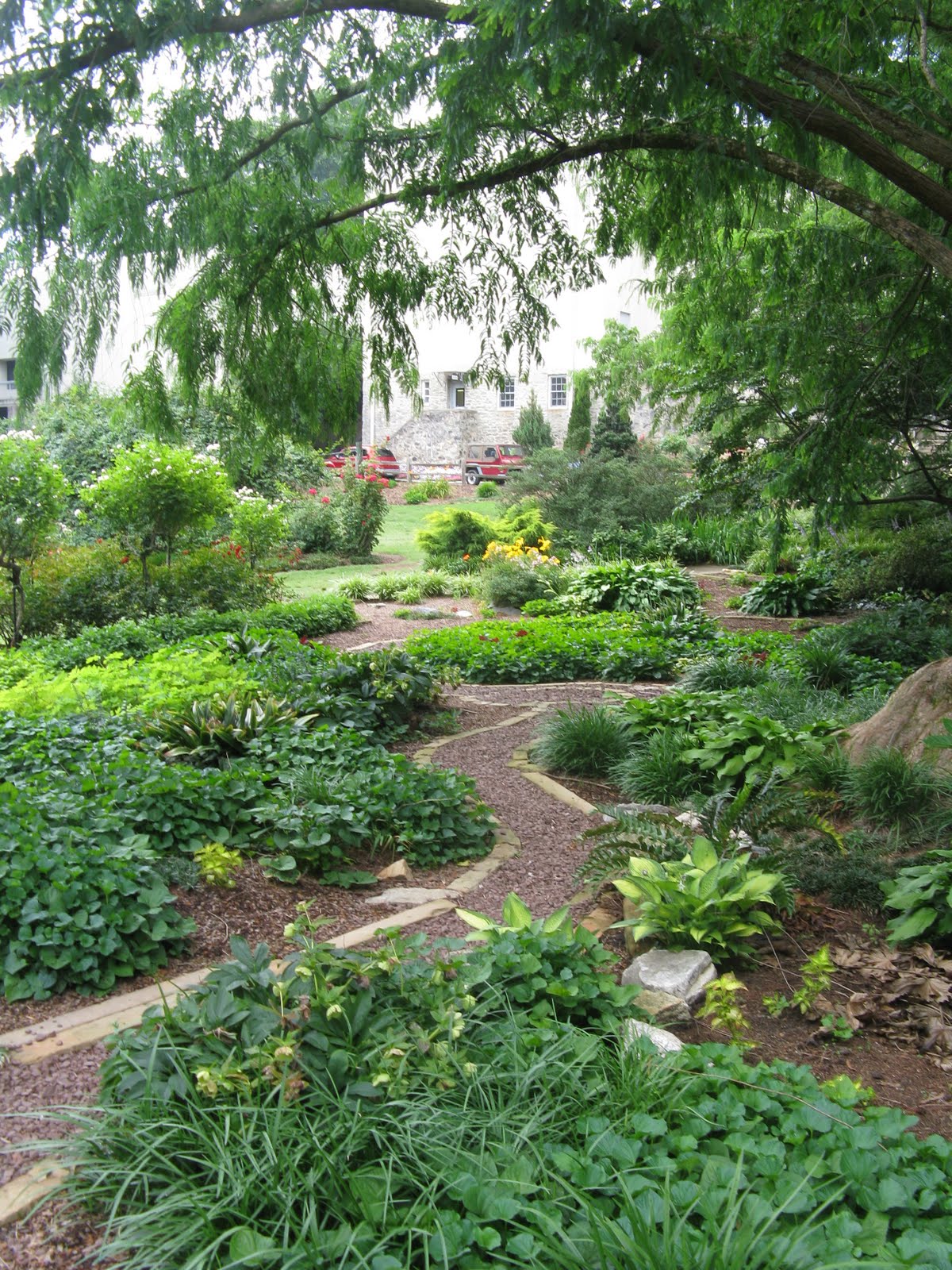
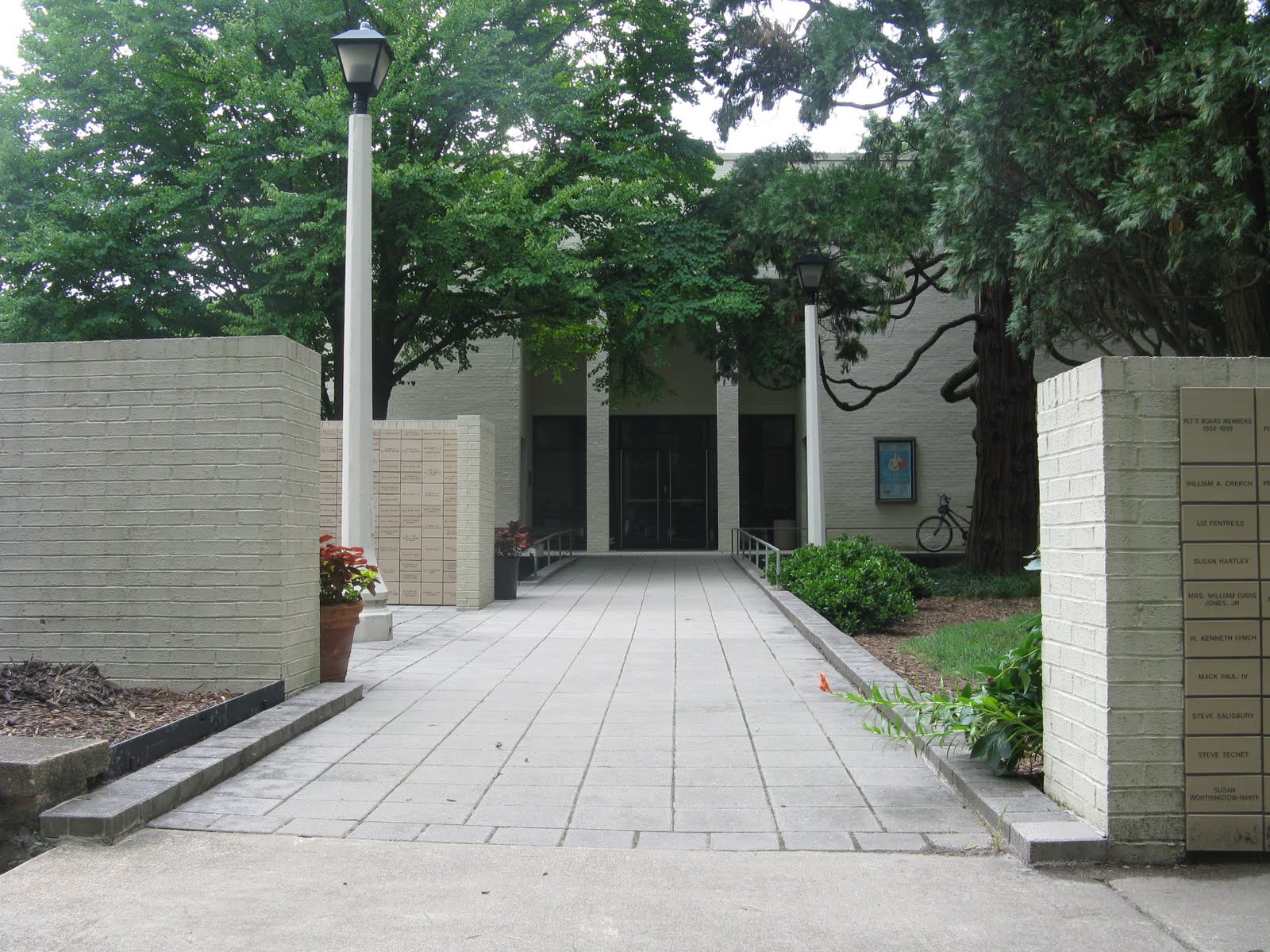
A recent visit to Raleigh Little Theatre and adjacent Rose Garden, caused me to realize the value of this little-known park. Located on Pogue Street in a well-established neighborhood just North of Hillsborough Street, this urban oasis offers beautifully landscaped gardens, many quite places for repose and a variety of shows and events – both indoor and outdoor.

Its neighborhood location, landscaped perimeter and sunken site make it near impossible to locate if you don’t know what you are looking for. Larger than a pocket park, (but certainly no regional park) the Rose Garden is a park unique unto itself. Moreover, the park serves as a prime example and metaphor for the beauty of the city of Raleigh. Initially there is no overwhelming reason to love the place, but over time, ones appreciation grows as the ease and tranquility of the locality becomes more apparent. A certain depth appears, which was not visible until one truly engages in the everyday life of the place. Both the garden and the city of Raleigh, have more to offer than what initially meets the eye.


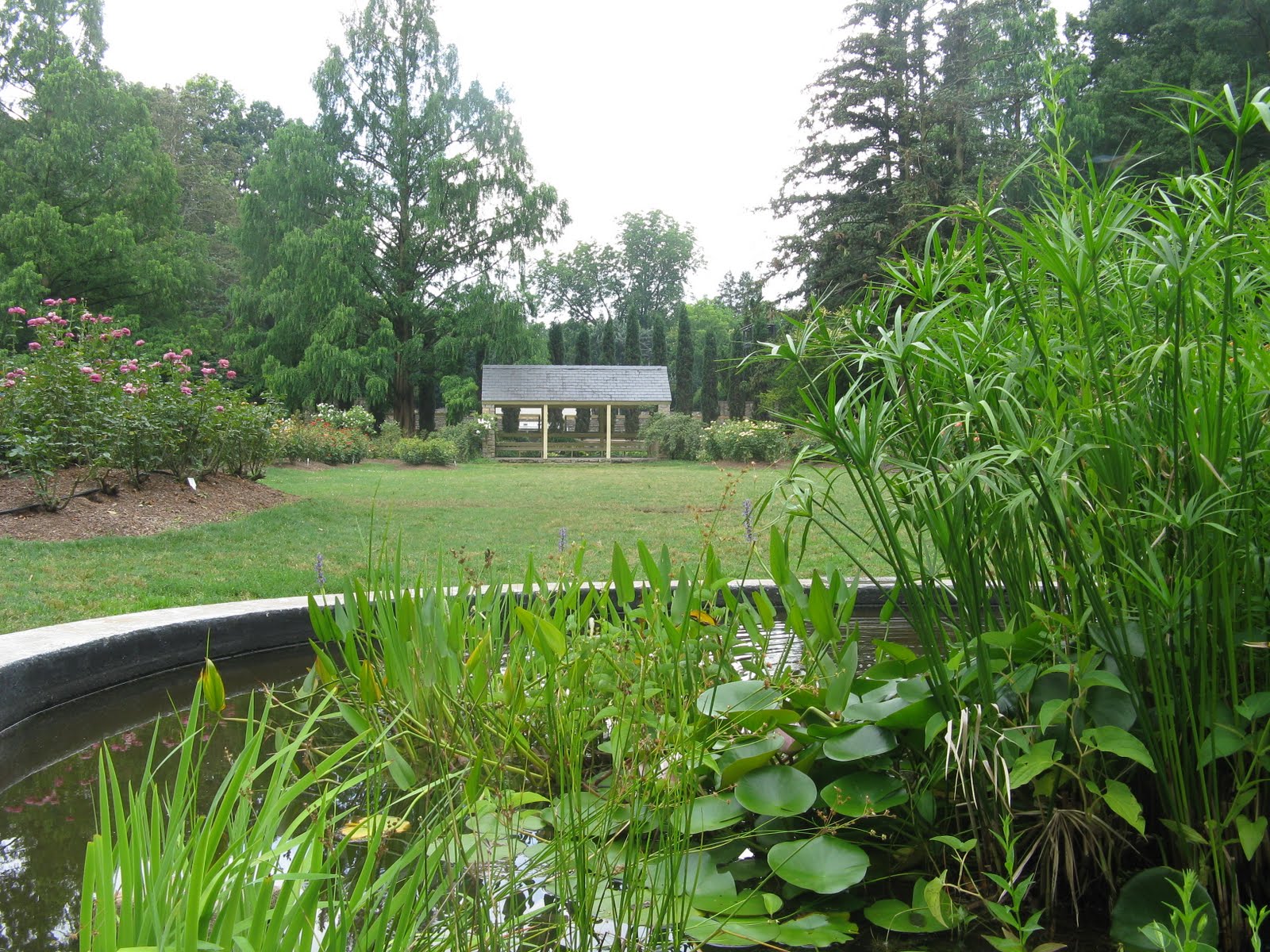
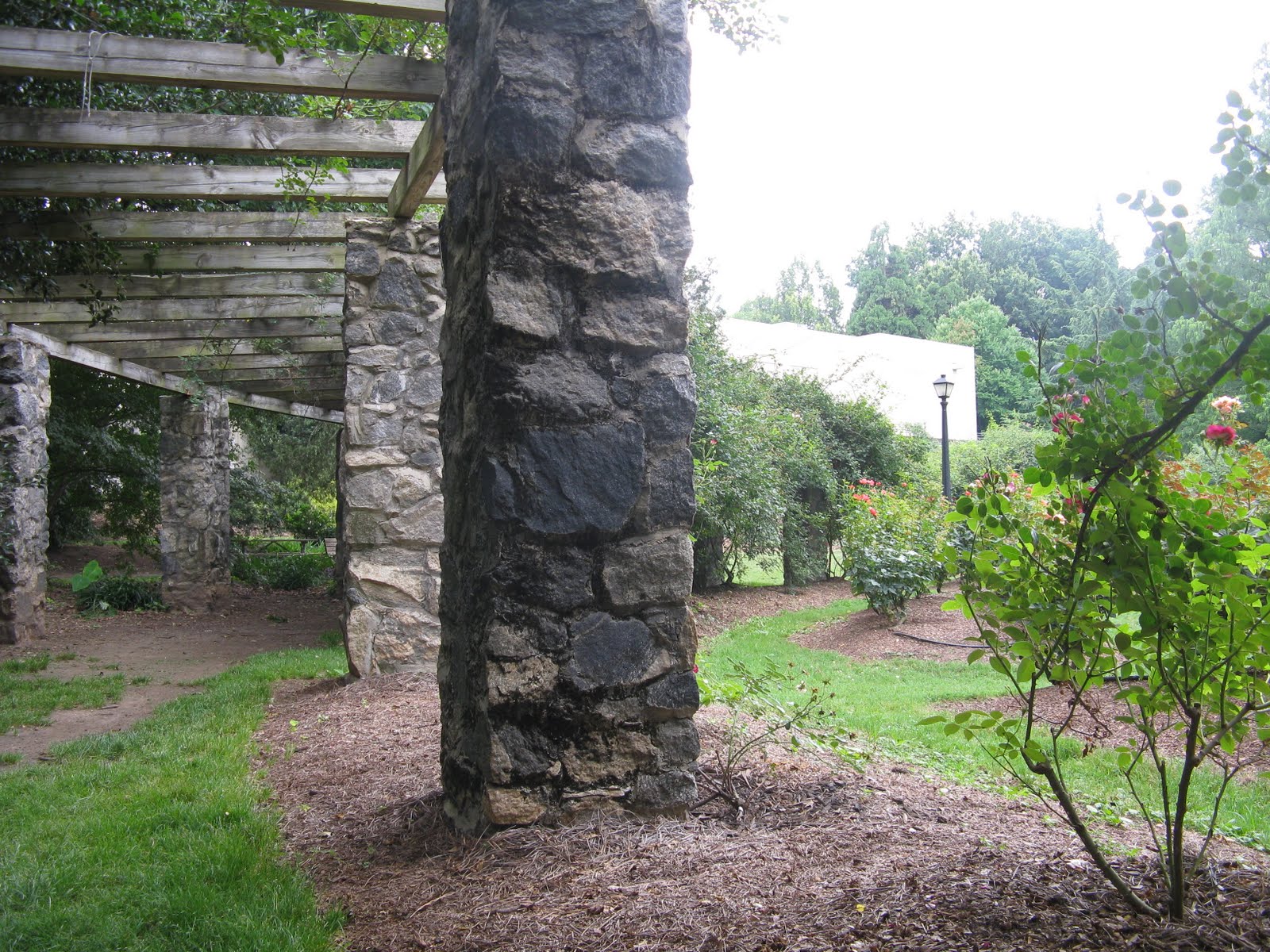
The conflation between the two entities – park and theatre – go together like a horse and carriage. The unassumingly appropriate theatre bounds the park and holds the street wall on the East end of the park. (If the garden is viewed from the West stair entry from Pogue Street, the park almost sets up like a Picturesque English Garden.) Meanwhile the Rose Garden establishes an axis beginning with an outdoor amphitheatre on the South, which continues through a small pavilion, an allee (flanked by rose bushes), a small fountain and finally terminates in a colonnade.

The simple lay out of the park works well – the only evidence I have that it works is that I didn’t have to think about it was I wondered through it. It just made sense, and we weren’t busy thinking about how it should have been laid out, but we were able to enjoy the surroundings.

This unexpected encounter in the garden taught me that many of the best architectural spaces – places that bring communities together, where all are equal, and where time seems to pause for a moment - never required anyone to lift a hammer. My only regret about this park is that many of my visits I get to enjoy it all by myself.


Friday, June 4, 2010

AIA Triangle Design Award Traveling Exhibit

The AIA Triangle Design Award exhibit is traveling through the chapter's 10 counties, and will be on display in the Raleigh Urban Design Center through July 15th. For directions and the Urban Design Center's website.


AIA Triangle received 54 project entries for the 2010 Design Awards program. The submittals represented work from architectural firms throughout the Triangle region. The awards presentation was held at Design Infusion on April 17th, 2010 in Durham.

Take advantage of this opportunity to support architecture in the Triangle and go visit the Urban Design Center before the exhibit is gone.

Thursday, May 13, 2010

Triangle Firm Increases National Recognition

Frank Harmon Architect PA continues to gain national recognition, this time appearing at number 13 on Architect Magazine's top 50, up from 26th last year. Congratulations to Frank Harmon and his staff for their efforts.


image from frankharmon.com 5/13/2010


From Frank Harmon Architect PA facebook page:

May 12, 2010 (RALEIGH, NC) – Frank Harmon Architect PA, a multi-award-winning firm based in Raleigh, NC and recognized nationally as a leader in innovative, modern, and regionally inspired “green” architecture, has placed 13th on Architect magazine’s 2010 list of the top firms in the nation, moving up from the 26th spot the firm held last year.

Frank Harmon Architect PA, founded by principal Frank Harmon, FAIA, in 1985, is the only firm in North Carolina to make the “Architect 50” this year. The Freelon Group in Durham placed 60th and Little in Charlotte placed 71st.

Unlike many other “top firms” lists, the “Architect 50” emphasizes ecological commitment and design quality as much as profitability as the editors determine the country’s very best firms. In fact, many firms ranking far lower than Harmon’s report revenues in the multiple millions.

Senior editor Amanda Kolson Hurley also notes, “Some commercially focused firms that were prominent last year have dropped off the list; conversely, this year’s biggest upward movers tend to be those with a bedrock of public-sector and infrastructural projects.”

Harmon’s firm has been working on and completing several “green” public-sector projects since the 2009 Architect 50, most of modest size and budget. They include Visitors Education Centers at Walnut Creek Urban Wetlands Park in Raleigh, the North Carolina Botanical Garden at UNC-Chapel Hill, Merchants Millpond State Park (recently featured in Architect magazine), and the N.C. Zoological Park (Children’s Nature Zoo). The firm is also working on oyster hatchery research facilities at UNC-Wilmington and in Northern Neck, Virginia, as well as a new Crafts Campus at UNC-Asheville.

Each of these projects embraces the principles of sustainability, both low-tech and high-tech, within regionally appropriate, modern designs. And each underscores the enjoyable aspects of energy conservation, such as natural light and ventilation; simple, familiar materials; and the use of deep porches for circulation and access to the outdoors.

In an introduction for Harmon at a North Carolina State University College of Design lecture, architecture Professor Paul Tesar stated:

“[Frank Harmon’s] buildings range from houses in the Bahamas to AIA Headquarters in Raleigh, from Eco-Stations to Parish Houses, from Iron Studios to Pottery Centers, and from Dog Boxes to Oyster Hatcheries – commissions, in other words, that most of us only can envy him for, because they somehow seem a little more inspiring than, say, 40,000 square feet of speculative office space next to a K-Mart parking lot.”

Of the higher ranking in this year’s “Architect 50,” Harmon said, “The usual rating of firms by gross billing, number of employees, etc., does not include our firm. But when we are rated on design recognition for our clients, sustainability, and financial performance, our firm shows up well.”

To see the entire 2010 Architect 50 list, go to www.architectmagazine.com.

For mo
re information on Frank Harmon Architect PA, visit www.frankharmon.com.

Tuesday, May 11, 2010

CAM Groundbreaking Event at 5:00 p.m. TONIGHT (MAY 11)


May 5, 2010

CAM ANNOUNCES GROUNDBREAKING AND MUSEUM COMPLETION PLANS

Public invited to May 11, 2010, Groundbreaking Event at 5:00 p.m.

Raleigh, NC - Raleigh’s Contemporary Art Museum (“CAM”) will officially break ground at its future home, 409 W. Martin Street, on Tuesday, May 11, 2010, at 5:00 p.m. The renovated 20,000 sq. ft. historic warehouse-turned-museum will serve as the only non-collecting museum of contemporary art + design in North Carolina.

Jay Gates, CAM Interim Director, City of Raleigh Mayor Charles Meeker and Dean Marvin Malecha, NC State College of Design, will lead the ceremony. Predicts Mayor Meeker: “The opening of the Contemporary Art Museum will be key to the revitalization of Raleigh’s Warehouse District. Its location near the City’s Convention Center and planned Union Station Transit Center, in addition to its innovative art and design exhibitions, will make the new museum an important cultural destination for our region.”

The movement of the project from concept to reality has been made possible by many individuals, foundations and a special initiative launched last year to obtain valuable Historic and New Market Tax Credits for the museum’s redevelopment. The tax credit programs will provide a direct subsidy of more than $2 million for CAM, or about one half of the cost of the museum’s redevelopment.

The new museum will house three galleries as well as dedicated educational spaces. Additionally, it will host changing exhibitions and the critically acclaimed Design Camp for high school students, while expanding the existing, community-wide adult and youth art and design programming.

News Facts:

• The Contemporary Art Museum was established in 1983 in Raleigh as the City Gallery of Contemporary Art.

• In 2006, the museum merged with the NC State University College of Design, becoming an extension of the College’s “Art and Design in the Community” Initiative. The merger expands the College’s K-12 outreach and introduces students and the larger community to a broad range of new creative and learning opportunities.

• CAM is a non-collecting museum of contemporary art and design. Its exhibitions reflect the leading edge of visual arts and design practice, while its educational programs offer a unique perspective on the role of contemporary art and design in our everyday lives.

• The museum is eligible for Historic and New Market tax credits based on the historic nature of the warehouse building being rebuilt and on the demographics of the census tract in Raleigh where CAM is located. The same programs have been used in North Carolina recently at the Civil Rights Museum in Greensboro and at the American Tobacco Campus in Durham.

• The architectural team of Clearscapes and Pugh + Scarpa has overseen the design of the new museum. Raleigh-based Clearscapes is well known for its local projects, including the historically sensitive Exploris Museum, the new Raleigh Convention Center, and the mixed-used revitalization of Pine State Creamery. The 2010 American Institute of Architects (AIA) National Firm Award winner, Pugh + Scarpa has offices in Santa Monica, CA, and Charlotte, NC.

• For more information, please visit the CAM Website: http://www.cam.ncsu.edu