
Enjoy browsing, but unless otherwise noted, these houses are private property and closed to the public.
So don't go tromping around uninvited! CTRL-F to search within the page.
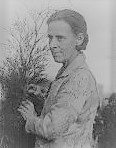
MARION LUCY MAHONY GRIFFIN (1871-1961)
Mahony was born in Chicago. After the Great Chicago Fire in 1880, her family moved to Winnetka and likely were heavily involved in the intellectual and Unitarian community. After Mahony's father died by suicide in 1882, her mother moved back to Chicago and became an elementary school principal. Mahony studied architecture at MIT, the second woman to graduate in that school's program. Mahony returned to Chicago and worked for her cousin Dwight Perkins. She became the first licensed female architect in Illinois in 1898. Through Perkins, Mahony met Frank Lloyd Wright and worked for Wright from 1895-1909. During those years, she contributed to the influential Wasmuth Portfolio. Her rendering of the K. C. DeRhodes House in South Bend IN, in particular, was praised by Wright. Her beautiful watercolor renderings of buildings and landscapes helped sell Wright's style, though she was never given credit by Wright. According to architecture critic Reyner Banham, Mahony was "America’s (and perhaps the world’s) first woman architect who needed no apology in a world of men." When Wright eloped to Europe with Mamah Cheney in 1909, he offered the work directly to Mahony but she declined. Hermann von Holst took on the job and hired Mahony with the stipulation that she would have control of the designs, becoming principal for a number of commissions Wright had abandoned.
Mahony and Walter Burley Griffin worked together in Wright's office before their marriage in 1911; afterward, Mahony Griffin worked in Griffin's practice. When Walter Burley Griffin was appointed Director of Design and Construction of Canberra in 1914, the couple moved there, and Mahony Griffin managed the Sydney office and was responsible for the design of their private commissions, including Cafe Australia, Newman College, and the Capitol Theatre.
Mahony and Griffin were introduced to Anthroposophy and the ideas of Rudolf Steiner. In Sydney they joined the Anthroposophy Society. They pioneered the Knitlock construction method, emulated by Wright in his California textile block houses of the 1920s. In 1936, Mahony Griffin traveled to India to manage her husband's practice in Lucknow. She returned to Australia but did not stay long after his death. By then in her late 60s, she returned to the US and retired from architecture.
She spent the next twenty years working on a book detailing her and Walter's working lives, The Magic of America. She died in poverty in 1961 at the age of 90 and is buried in Graceland Cemetery. For decades following her death, Griffin was seen only for supporting Frank Lloyd Wright and Walter Burley Griffin. Over the years historians consistently marginalized her contributions and criticized her unfeminine looks. That began to shift in the early 2000's. Bio adapted from Wikipedia.
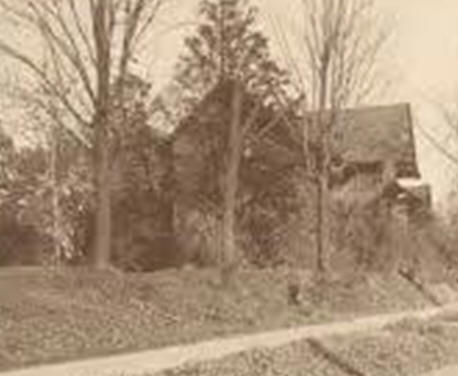
1907 - The Gerald and Clara D. (Hattie) Mahony House, 1000 East Jackson Street, Elkhart IN. Sat alongside the St. Joseph River. Destroyed in 1968. Gerald was Marion's brother. The lot sat empty until 1984 when condominiums were built.
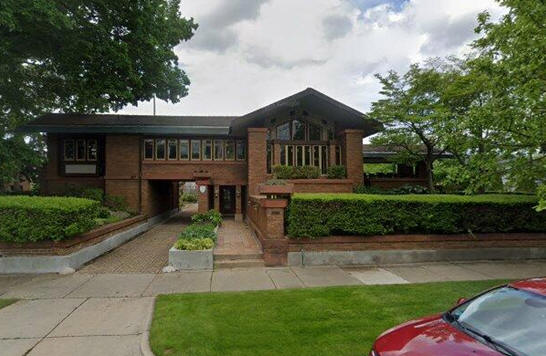
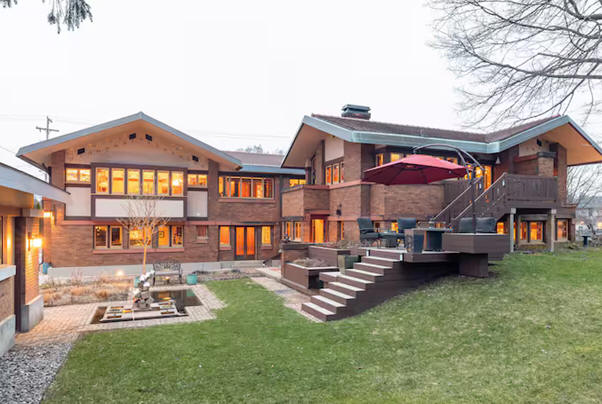
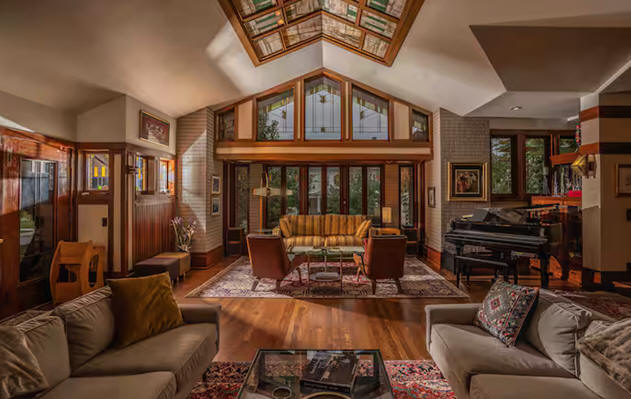
1909 - The David Amberg House, 505 College Avenue SE, Grand Rapids MI. Sold in 2013 to Deborah Kammeraad Scott Cloney. Some of it is available to rent on AirBnB.
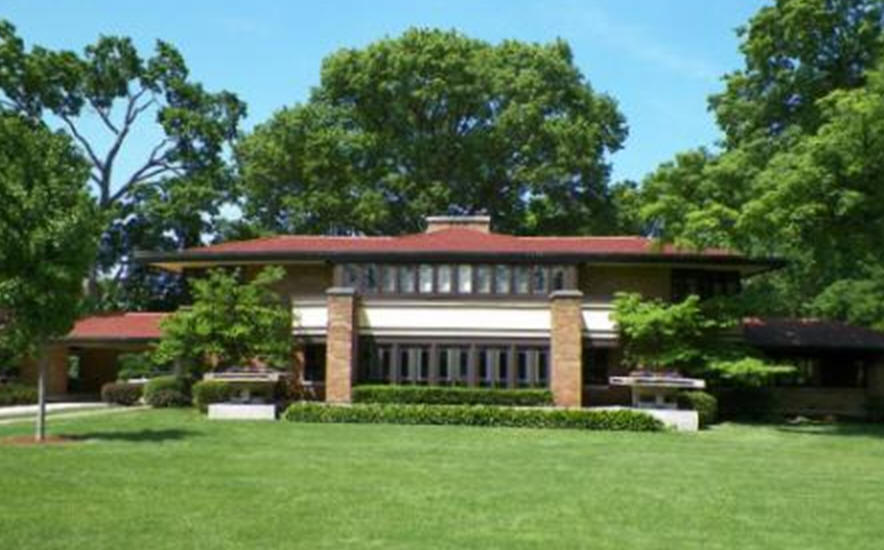
1909 - The Edward P. and Florence Irving House, 2 Millikin Place, Decatur IL. Wright prepared preliminary sketches of the house just before departing for Europe. Although the plans only bear Wright's signature, the house is generally considered to be Mahony's design, and she supervised the build. Sold by heirs in 1950 to E. Frank Beaman. Sold in 1955 to Robert Brown. Sold in 1960 to George Walker. Sold in 1972 to William and Bonnie Dutton. Sold in 1987 to James and Alice Sloan. Sold in the 1990's to Greg and Alice Brock. Sold in 2013 to Marc and Andrea Willis. Sold in 2017 to Mark and Jennifer Brandyberry.
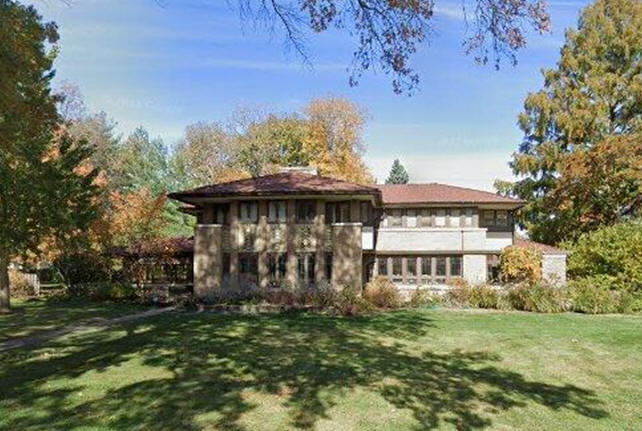
1909 - The Robert and Addie Mueller House, 1 Millikin Place, Decatur IL. Brother to Adolph Mueller, below. Sold for the first time in 1959 to Roy Rollins after the death of Addie Mueller. Sold in 1970 to Barrett Geoghegan. Sold in 1979 to T. Aiden Ferry and Linda Ferry. Sold in 1998 to Sherri Stroup Arnold.
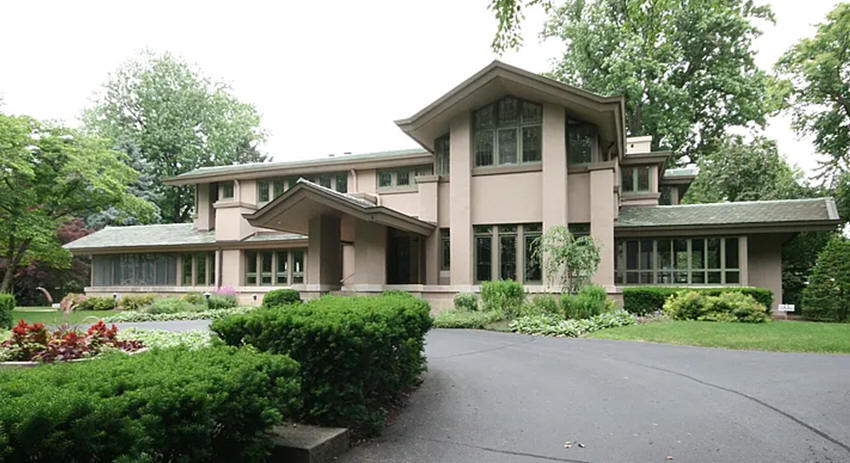
1910 - The Adolph and Minnie Mueller House, 4 Millikin Place, Decatur IL. Brother to Robert Mueller, above. Interior remodel after small fire in 1919. In 1927 an extensive interior remodel was done by the Bainbridge Brothers. A 10' x 13' foot room addition was built in 1938. At the death of Minnie Mueller in 1946 the house was sold to Richard Reeser. Sold around 1961 to Harold Hamilton. Sold in 1965 to George Tietz. Sold in 1988 to Clarence and Shirley Johnson. Sold in 1993 to Millikin University, became the residence of the President.
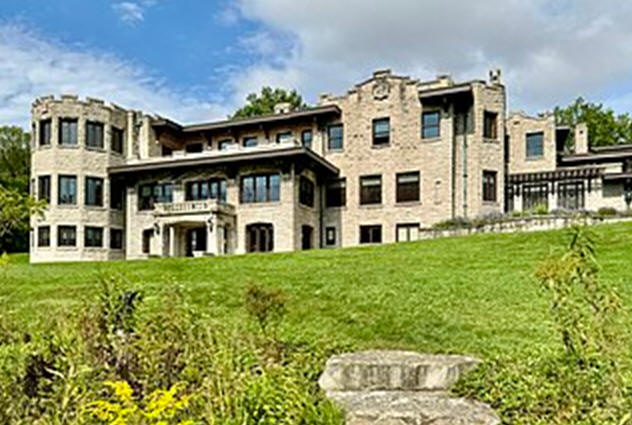
1913 - The Henry Ford House, aka Fair Lane, 1 Fair Lane Drive, Dearborn MI. Completed by later architect. Ford hired Frank Lloyd Wright who began the design then Mahony was asked to step in. When she revised the plan, Ford dismissed her and hired William H. Van Tyne to add English Manor details. In 1913 architect Joseph Nathaniel French worked on the final stages and the house was finally built in 1915.
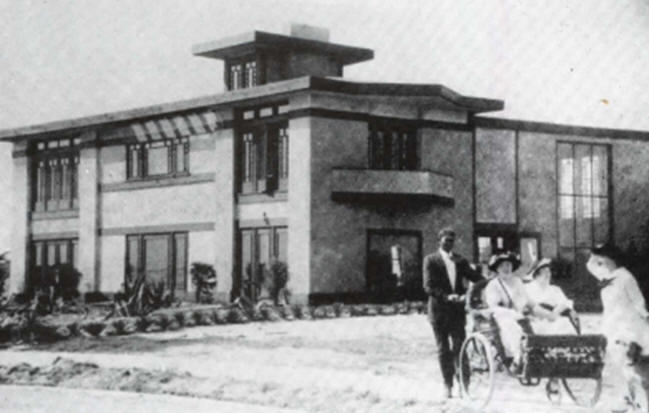
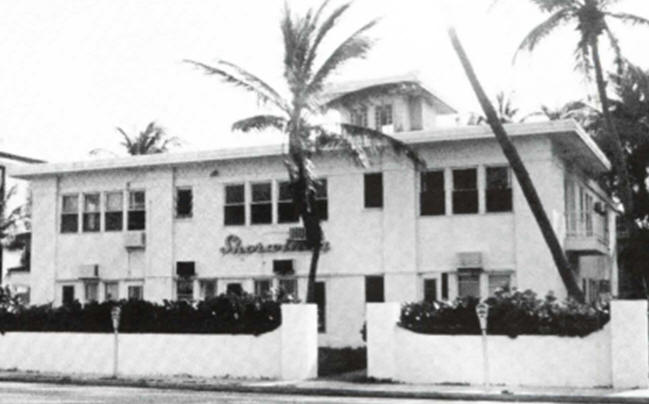
1914 - The William Louis and Zila
Koehne House, aka Zila Villa, 364 South Ocean Avenue, Palm
Beach FL. Sold in 1945 to Phillip Reid. In 1949 the Reids hired local architect
Belford Shoumate to turn the housee into an apartment hotel
with 7 apartments and re-named it Shorwinds, butchering the
original design. Reid sold the apartment hotel in 1974 to developers Michael
Burrows and Harold Kaplan. Destroyed in 1974.
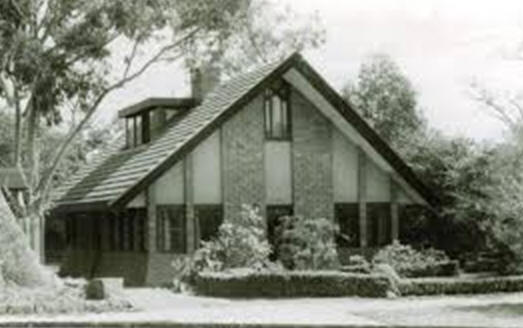
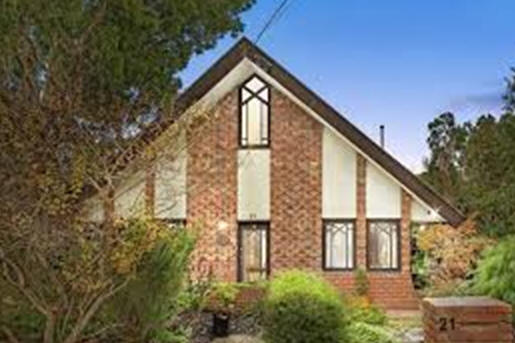
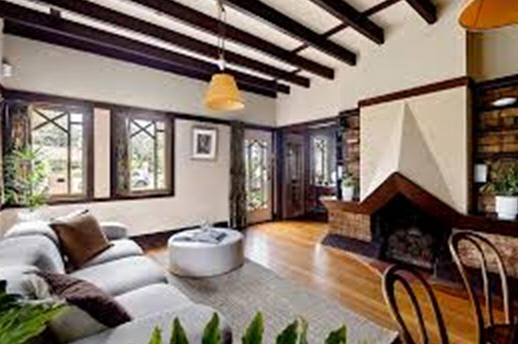
1917 - The Roy and Genevieve Lippincott House, 21 Glenard Drive (Glenard Estates), Eaglemont, Melbourne, Victoria, Australia. Next door to Pholiota, the home of Walter and Marion. Clients were Walter Burley Griffin's sister and brother-in-law. Roy Lippincott helped with the build. Sold in 1922. Sold in 1939 to Vaughn Murray Griffin Jr. Sold in 2023

1919 - Their first experiment with minimalist dwelling design was a pair of cottages, Gumnuts and Marnham, Frankston, designed for their use as a weekend retreat.
1919 - Brick and Rough cast House, Ringwood, Victoria, Australia. Unbuilt.
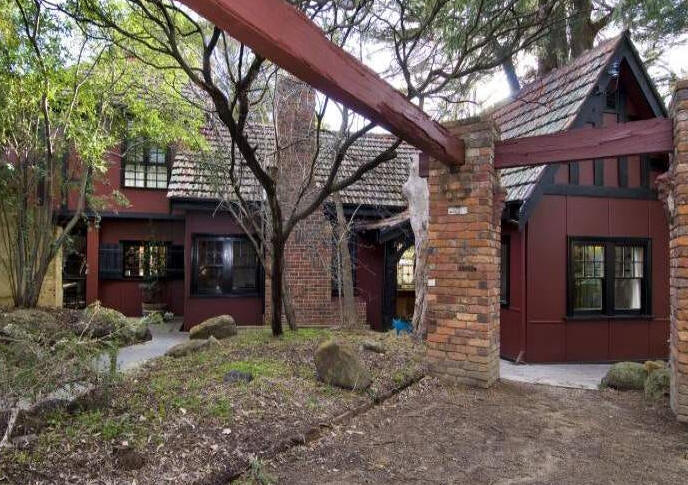
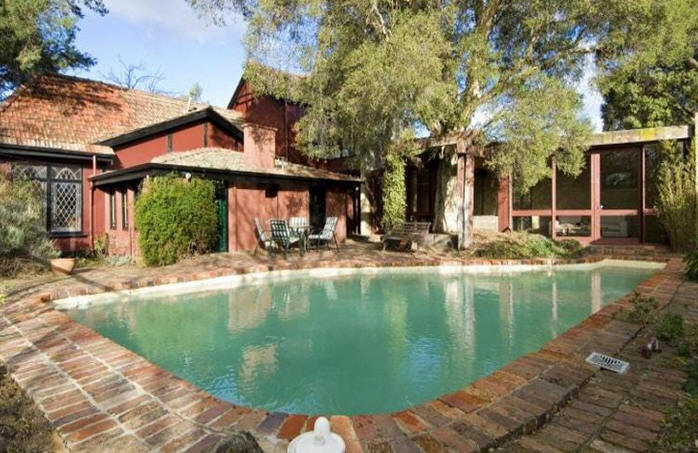
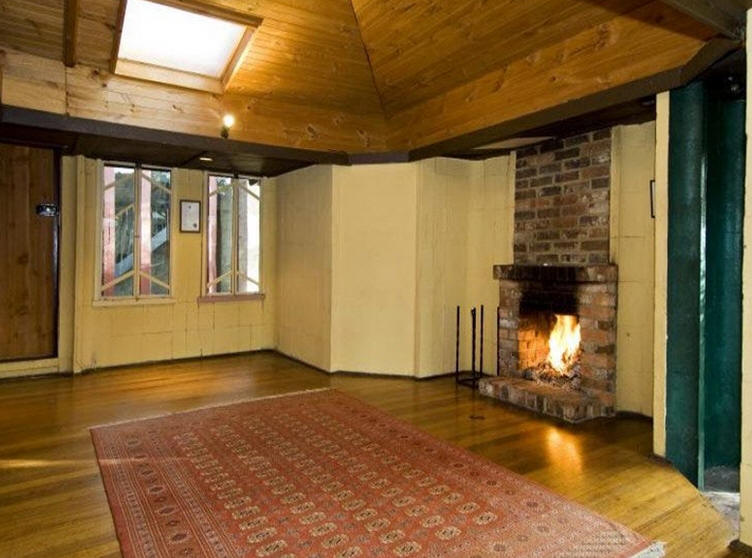
1920 - The Walter and Marion Mahony Griffin House, aka Pholiota House, 23 Glenard Drive, Eaglemont Victoria, Australia. Built using Knitlock concrete blocks. Subsequent additions, particularly in 1938, have concealed the original building from the street. Pholiota was sold in 1925 after Walter left Melbourne to join Marion in Sydney and the house then had a series of owners. In 1938 it doubled in size and was again extended in 1975. Significantly altered on the inside but the Knitlock wall tiles survive.
1920 - The Hume House, Braybrook, Victoria, Australia. Unbuilt.
1920 - The Baracchi House, Fairfield, New South Wales, Australia. Unbuilt.
1921 -The Reynolds House, Canterbury. Unsure if built.
1921 - The Alban Willis House, Mentone, Victoria, Australia. Status unknown.
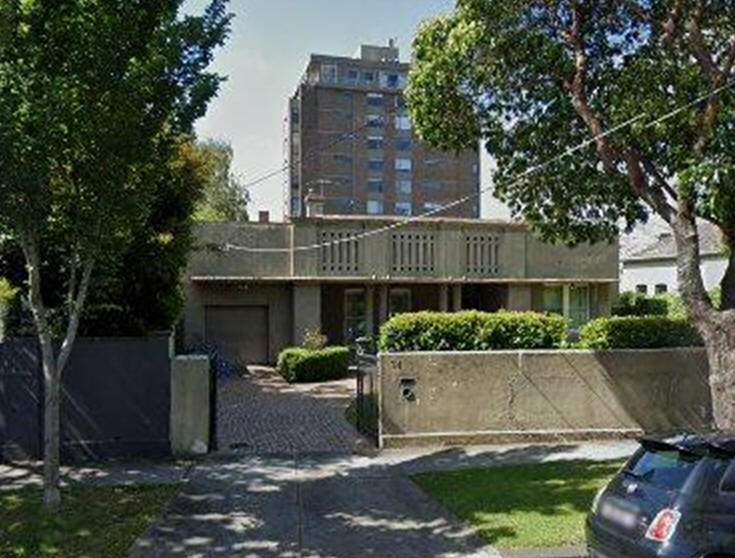
1922 - The Mary Williams House Renovation, 74 Clendon Road,Toorak. Renovation of a Victorian house. This was next to the Paling house. Sold in 1986.
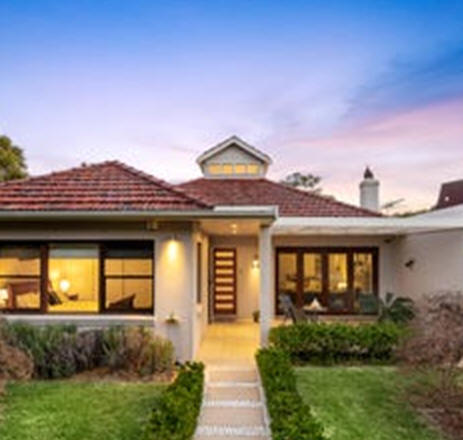
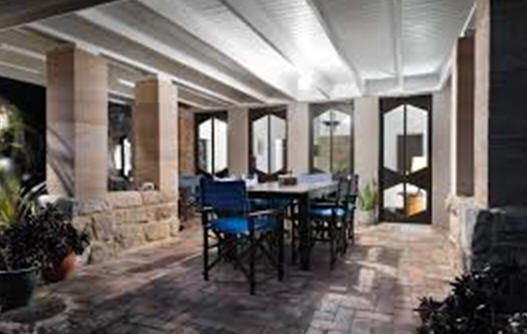
1922 - The Sir William Elliot Johnson House, 4 The Parapet, Castlecrag, Sydney, Australia. A detached garage was added. Restoration in 2005. Sold in 2023.
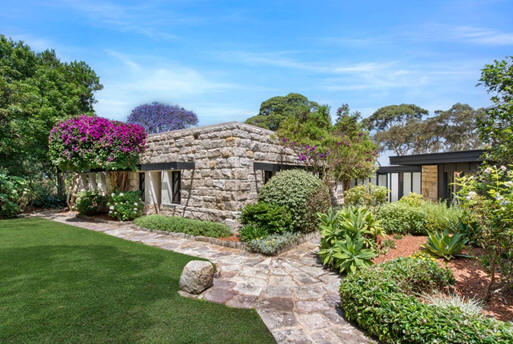
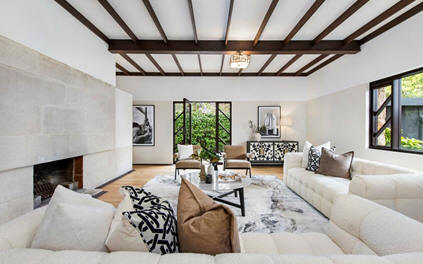
1922 - The Reverend Cheok Hong Cheong House, 14 The Parapet, Castlecrag, Australia. 1946 additions by Hugh and Eva Buhrich. Restoration 2007-2011 by Scott Robertson of Robertson and Hindmarsh. One of 15 houses in Castlecrag built for investors in the Greater Sydney Development Association. The 1946 addition included the building of a separate laundry and storage building. For sale in 2024.
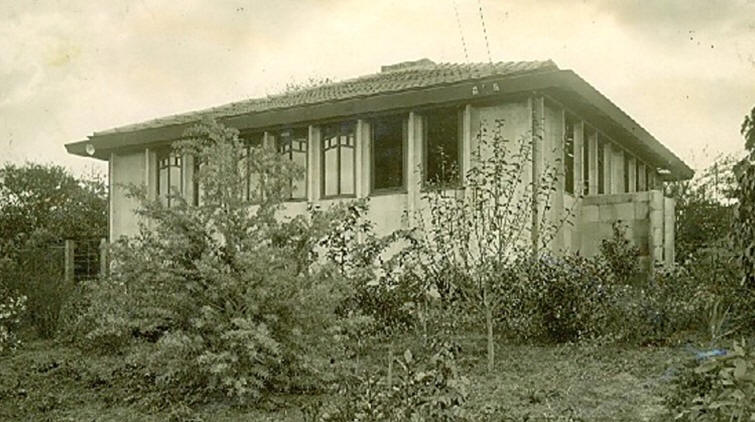
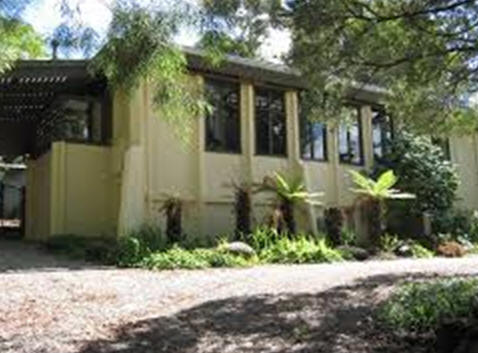
1923 - The Julian Street Jefferies House, 7 Warwick Avenue, Surrey Hills, Boroondara City, Australia. Knitlock construction. An additional building is now on the property, unsure if by the Griffins. Sold in 2014.
1923 - The Alban Willis House, 3 Dickens Street, Woodend, Victoria Australia. Built with Knitlock. Sold in 1927 to John Percy Chirnside. Remained in the family until the late 1940's. In 1998 it suffered storm damage and was in poor condition. Placed on the Victorian Heritage Register in 1996 and updated with amendments in 2022.
1923 - The Elsie Hayward House, 6 3rd Avenue, Black Rock, Victoria, Australia. Destroyed around 1980.
1924 - The William R. Paling House, 248 Kooyong Road, Toorak. Destroyed in 1969. Built with the Knitlock system. A small bungalow that was part of the former Salter estate was repaired with parts of the Paling House. That bungalow has since been destroyed.
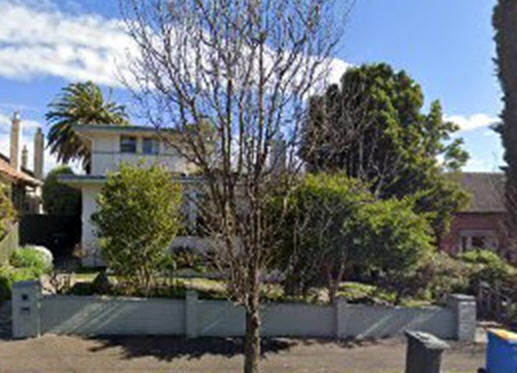
1925 - The James Beament House, 33 Uvadale Grove, Boroondara City, Kew, Victoria, Australia. Possible later modification by Eric Milton Nicholls, assitant to Griffin and Beament's nephew.
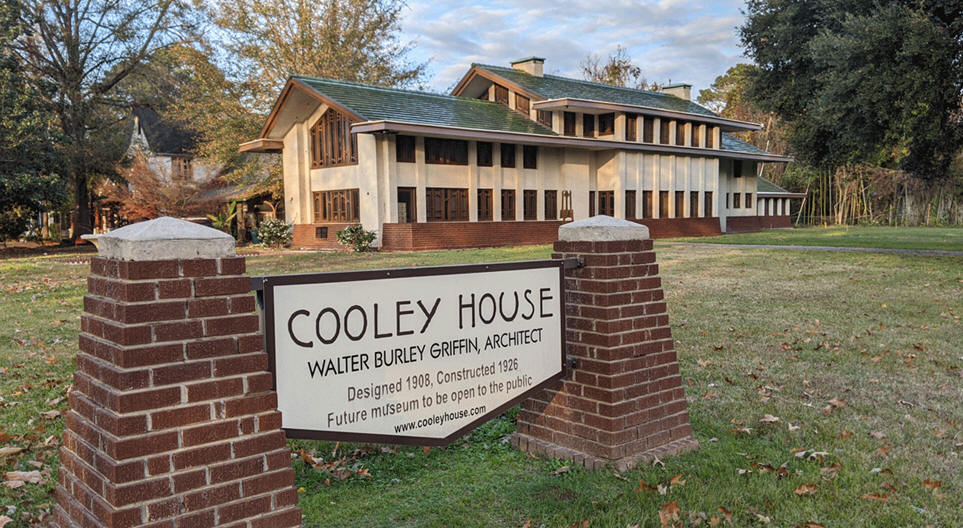
1925 - The Gilbert Brian Cooley House, 1011 South Grand Street, Monroe LA. This was the last structure the Griffins designed in the US. Commissioned 1908. Typically credited only to Walter Griffin. Cooley died in 1952, his wife stayed in the house until her death in 1955. The home was left to a nephew. Sold in 1958 to Donald Hughes. In the late 1960s, the house was divided into apartments and was later used as an attorney’s office 1970s through 1991. Placed on the National Register of Historic Places in 1986. Sold to the City of Monroe in 2008. Around 2023 the house's Foundation received a Saving Americas Treasures grant to restore the house.
1925 - aka Langi Addition, Toorak and Lansell Roads, Toorak, Australia. Addition of 4 rental flats at the rear of an existing house. A year later he remodeled and extended the existing house into a further 4 flats. Status unknown.
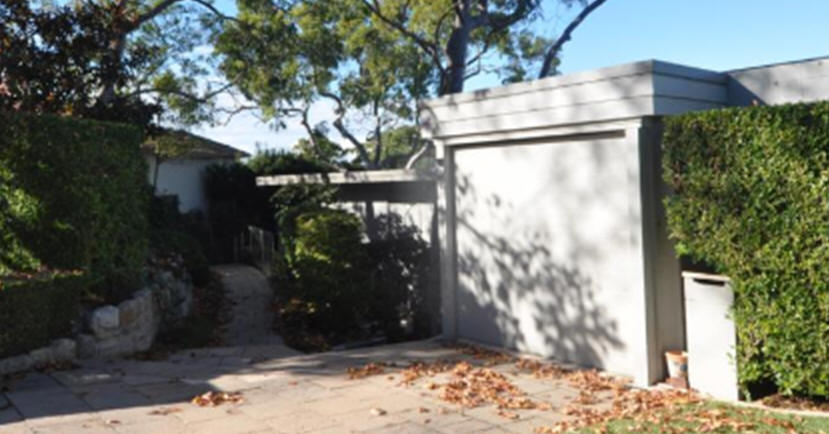
1926 - The Ellen Mower House, 12 The Rampart, Castlecrag, Sydney Australia. This was the first knitlock building with a flat roof. A skillion roof was added in the mid 1960s. The portico entrance at the eastern side was enclosed. In 1978 the chimney was removed to expand the living area and create more rooms. In the 1990s a bedroom wing was added to the southeast.
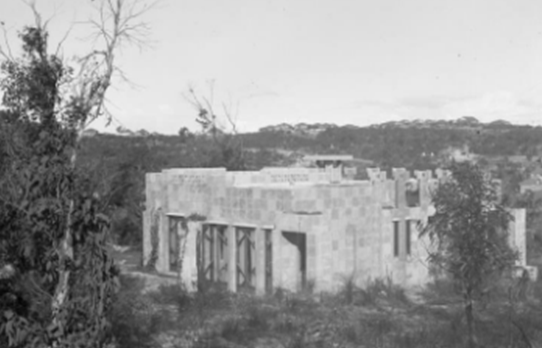
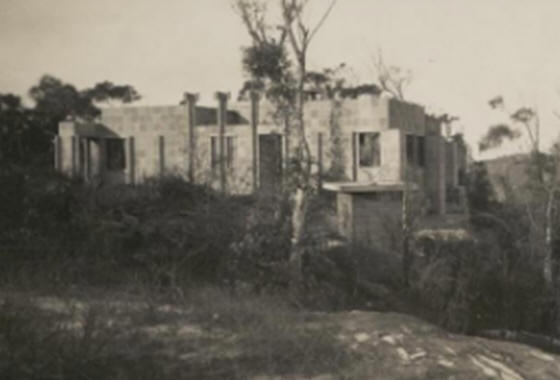
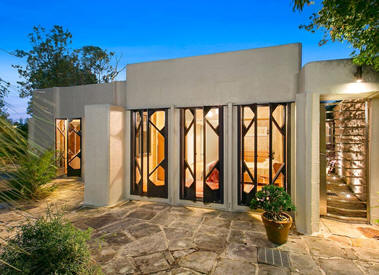
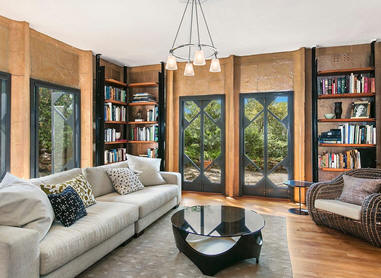
1926 - The Creswick House, aka House of Lanterns, 4 The Barbette, Castlecrag, Sydney, Australia. One of the most intact Griffin and Mahoney houses and one of a group of 3 in the Barbette. The lanterns were removed at some point. Sold in 2014.
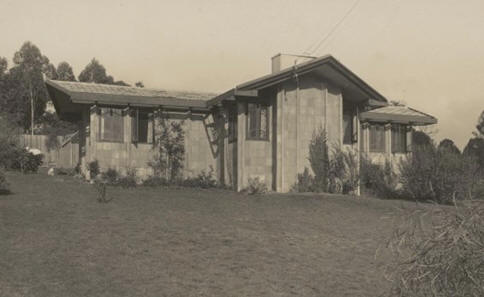
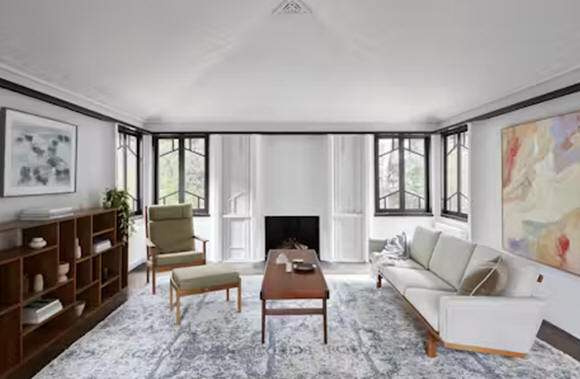
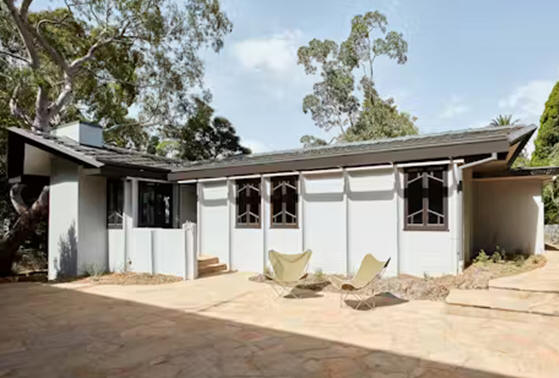
1927 - The Stanley R. Salter House, 16A Glyndebourne, Toorak, Victoria, Australia. Additions from the early 1960's. Renovations by architects Christopher Hewson and Jane Cameron. Last sold in 2018.
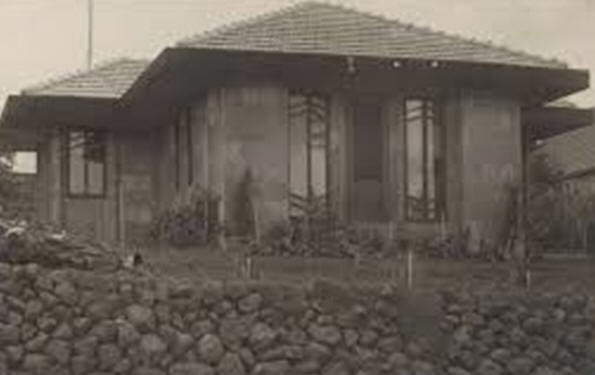
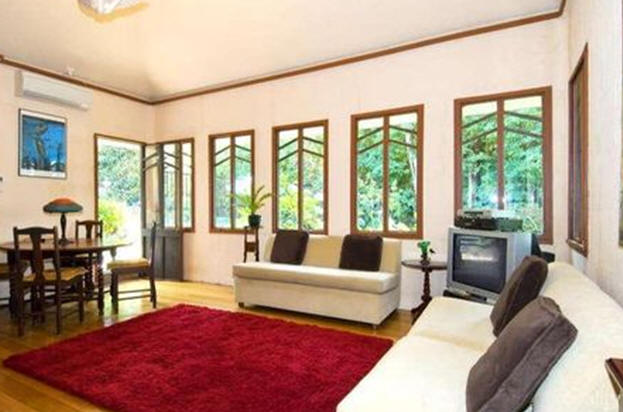
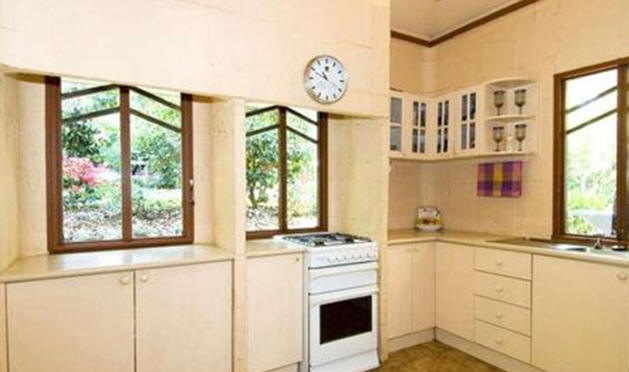
1927 - The Vaughan Griffin House, 52 Darebin Street, Heidelberg, Victoria, Australia. Knit Lock construction. Last sold in 2008. Client was no relation to the architects.
1927 - The Mary Williams Residential Flats, aka Cloisters, Toorak, Australia. Unbuilt.
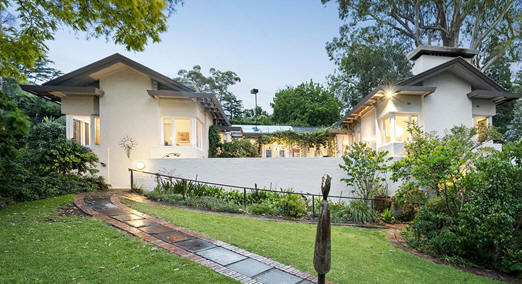
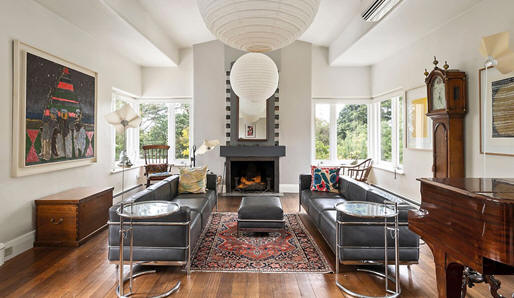
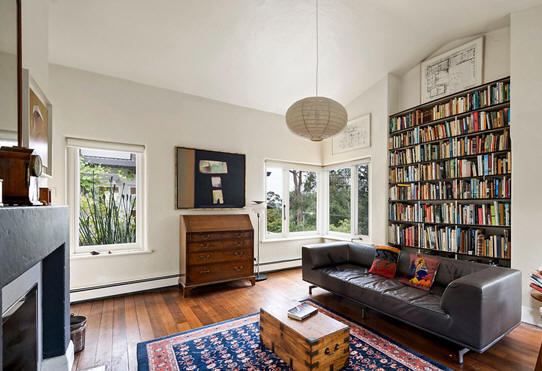
1928 - The Skipper House, 45 Outlook Drive, Mount Eagle Estates, Eaglemont, Victoria, Australia. Thoughtfully remodeled. Sold in 1981. Sold in 2024.
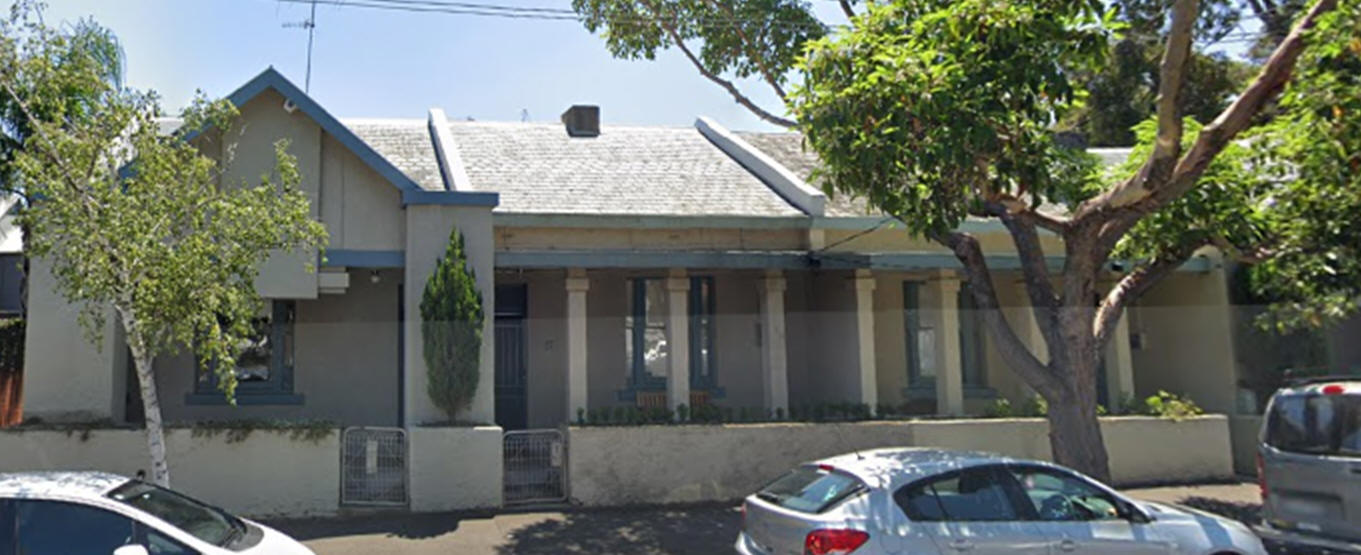
1928 - The Lawrence Row House Remodel, 15 Rose Street, Armadale Victoria Australia. Griffin and Mahony remodeled the facade of a Victorian house. Sold in 2011.
1932 - aka Hiddlestone, Eaglemont, Victoria, Australia. Unbuilt.
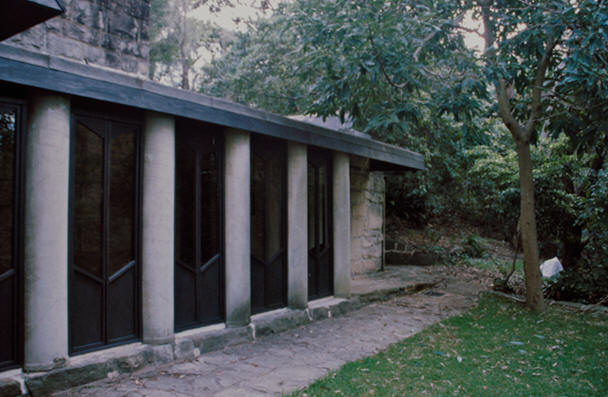
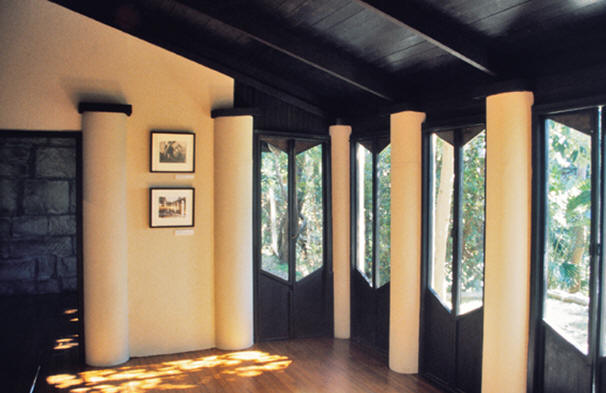
1934 - The Stella James and Clare Stevenson House, aka Walter Burley Griffin Lodge, 32 Plateau Road, Avalon Beach, New South Wales, Australia. A two-bedroom weekender house. In 1957 a third bedroom, designed by Sydney Ancher, was added. The original owners donated the home and the site to the National Trust of Australia in 1964. By 1977 the house was suffering from severe termite damage and the entire roof of the house was replaced. By the 1990s the house had again deteriorated. Robertson & Hindmarsh were commissioned in 1992 for another restoration. Heritage listed property.
Year unknown - The Foster Salters House, Brighton. Unbuilt. Stanley Salters brother had a Knitlock house designed.
Year unknown - The Alfred Ewins House, Ballaret Australia. Stanley Salters' brother in law. Unsure if built, only a trace plan survives.
Sources include: Catherine Westergaard Cramer, wwwgriffinsociety.org.